By Robert Balgac, Founder, Black Swan Insurance Group | October 7, 2026
High earners with international careers reach a particular version of the same wall. The term policy and the 401(k) worked fine while everything sat in one country. Then there is income in two places, beneficiaries in a third, and a relocation on the horizon that nobody has stress-tested against the plan.
IUL gets pitched as the answer to all of it. The honest question is narrower: can a properly funded policy complement what you already have, and does it still work after you move?
The short answer: "Global" almost always describes the policyholder, not the policy. The contract is still issued by a licensed US carrier under state insurance law. What changes when you live abroad is servicing, currency exposure, beneficiary logistics and — most importantly — the tax treatment applied by your country of residence, which can differ sharply from US rules. No structure makes that complexity disappear.
Key Takeaways
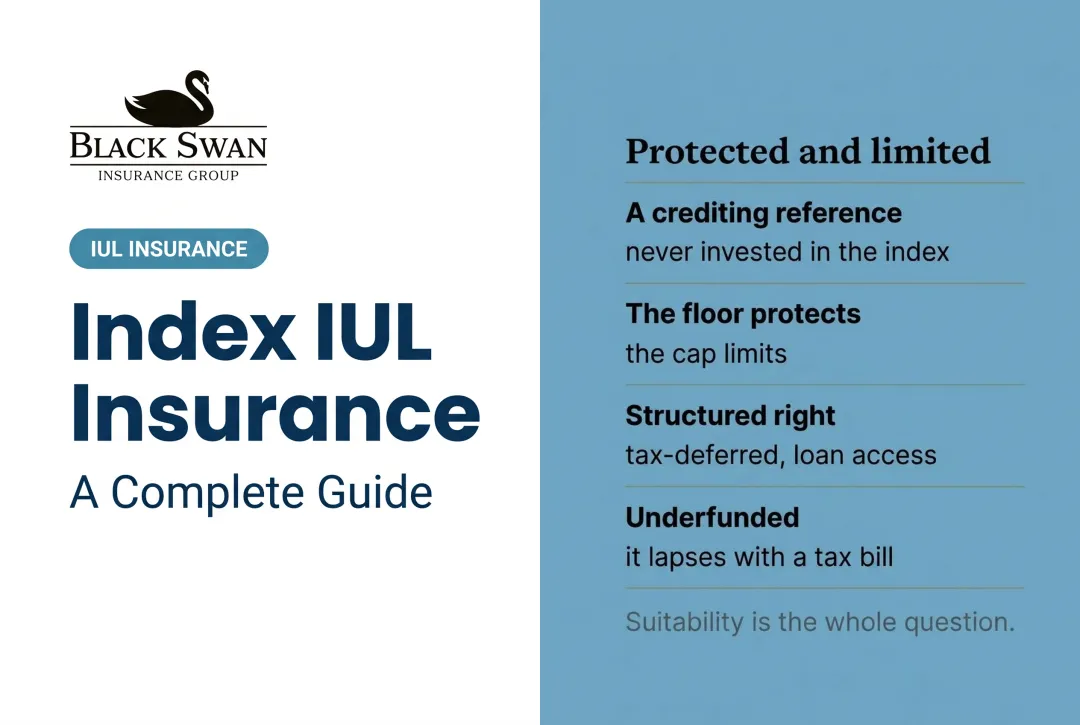
- IUL credits interest by reference to an external index; you never own index shares
- A floor limits negative crediting; caps, participation rates, spreads and fees limit the gain
- Loans and withdrawals reduce cash value and death benefits, and can create tax problems if the policy lapses
- Treat it as a long-term commitment requiring sustainable funding and annual reviews
- Cross-border ownership adds servicing, currency and dual-tax questions that need professional advice
What "Global" Actually Means Here
IUL is permanent life insurance with two components: a death benefit, and a cash value account that can receive interest credits tied to an external index. The NAIC defines indexed universal life as coverage where interest credits reference an outside index, separate from the mortality and expense charges deducted from the policy.
"Global" typically describes your situation — international income, assets in multiple countries, beneficiaries abroad, relocation plans, or cross-border filing obligations. The policy itself remains a US contract. Treatment depends heavily on where you live now and where you intend to live later.
Where the Premium Goes
Premium does not flow straight into cash value. The carrier first deducts premium expense charges, cost-of-insurance charges that rise with age, monthly administrative fees, and rider charges if you have added living benefits. What remains contributes to cash value, which may then receive an index-linked credit.
Crediting in Practice
Say the policy references the S&P 500 with an 8.5% cap, 100% participation and a 0% floor. Per the NAIC's indexed-life illustration benchmark, that combination is a regulatory reference point — not terms every policy offers.
Index up 12%, you credit 8.5%. Index down 15%, you credit 0% rather than taking the loss.
That zero applies to the crediting calculation only. It does not stop cost-of-insurance and administrative charges deducting from cash value every month.
Zero is your hero in a down year — but the floor applies to the credit, not to the charges.

Every illustration shows guaranteed values based on worst-case contract terms and non-guaranteed values based on current assumptions. Read the contract, not the attractive column.
The Ultimate IUL Blueprint
Before funding anything, the Blueprint covers what the design has to survive: funding levels, caps and charges, the MEC line, loan timing, and what to demand from an illustration.
Benefits, Costs and the Risk Nobody Illustrates
Structured carefully, IUL can provide permanent protection, cash-value accumulation potential, flexibility over premiums and death benefit, optional living-benefit riders, and tax-deferred growth under current rules. For households already maxing qualified accounts, it adds genuine tax diversification.
The trade-offs are equally real.
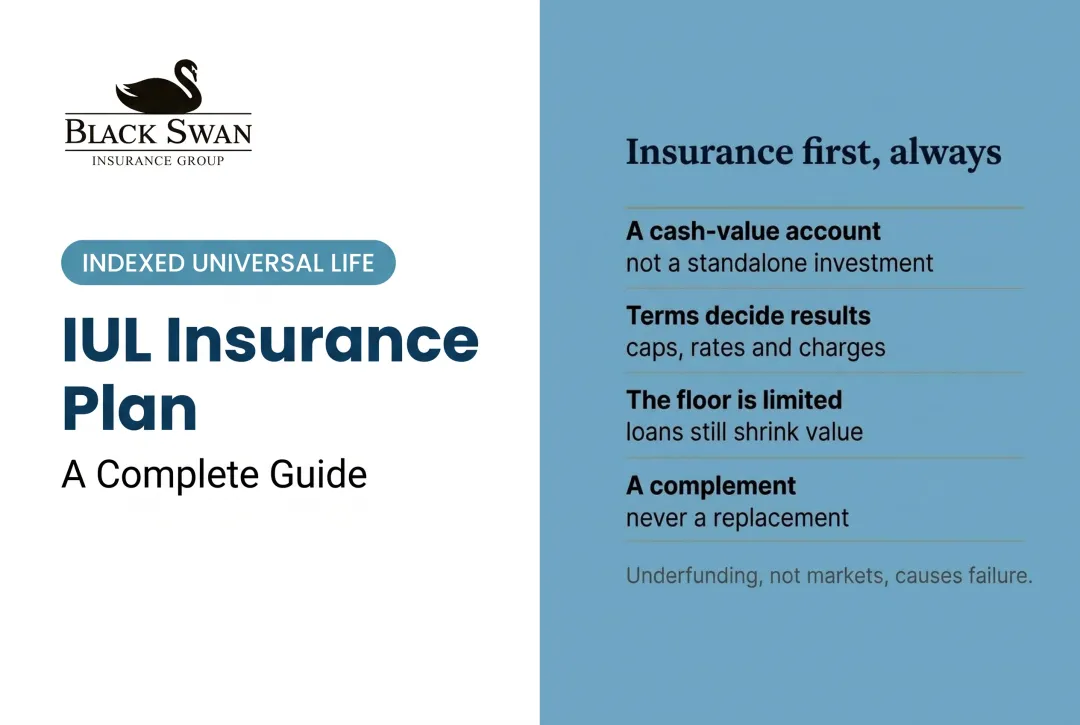
A 0% floor is downside protection for the crediting formula, not for your cash value. Cost of insurance, administrative fees, rider costs, outstanding loans and withdrawals continue regardless of index performance.
In every illustration, read the premium expense charges, monthly policy expenses, cost of insurance (which rises annually with age), surrender charges, rider fees, and loan interest. Those six lines decide the outcome. The cap rate on the cover does not.
Lapse risk is not theoretical. A policy lapses when cash value cannot cover the charges keeping it in force — from underfunding, weak credits, rising insurance costs, or heavy loan activity. LIMRA's study of universal life lapse and surrender experience from 2015–2021 found lapse rates rose significantly in 2019–2020 against 2015–2018. Funding discipline matters more than any single year's crediting.
Tax exposure needs a professional. Death proceeds are generally not taxable to beneficiaries. Cash surrender is taxed on amounts exceeding basis, and unrepaid loans enter that calculation. Overfund beyond IRS limits and the contract becomes a Modified Endowment Contract. Under IRS Notice 2007-15, MEC distributions are taxed income-first and MEC loans are generally treated as taxable distributions, sometimes with an additional 10% penalty.

What the Critics Get Right
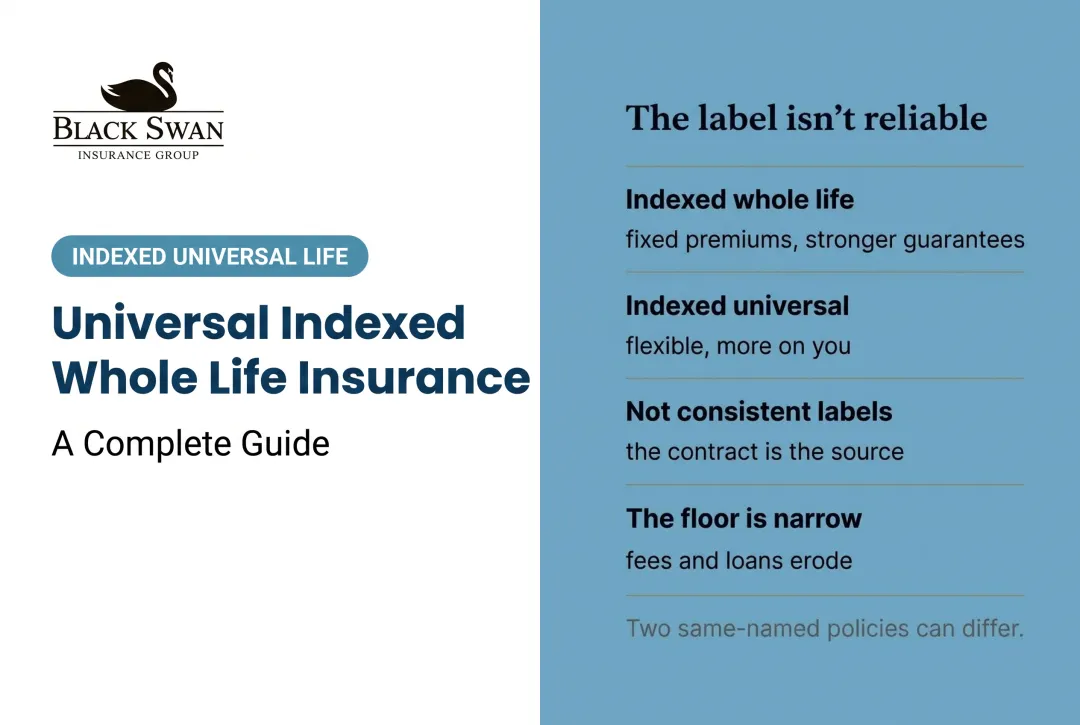
The sharpest criticism of "global IUL" is that the word global is doing marketing work rather than describing a product feature.
There is no special international contract. There is a US policy, sold to someone with an international life, and the cross-border complications are handled by that person's accountants rather than by the policy. Anyone presenting an "offshore" or "global" structure as automatically portable, superior or tax-free is describing something that does not exist.
What the criticism misses is that internationally mobile high earners genuinely do have a protection and tax-diversification problem, and it is frequently worse than a domestic one — more jurisdictions, more currencies, more ways for a beneficiary to wait eighteen months for a claim. The complexity is real. It is just not solved by a product label.
Comparing It Honestly
Against term: term is cheaper for a defined period — 10, 20 or 30 years — and fits income replacement, a mortgage, or education funding. It builds no cash value. IUL costs more, lasts for life if funded, and accumulates value. If your need ends, term wins and it is not close.
| Feature | Whole Life | Guaranteed UL | IUL |
|---|---|---|---|
| Premium | Fixed schedule | Fixed for guarantee | Flexible |
| Cash value guarantee | Yes | Minimal | No, index-linked |
| Death benefit guarantee | Yes | Yes, if funded | Conditional on funding |
| Primary purpose | Guaranteed accumulation | Guaranteed death benefit | Growth potential with flexibility |
Against qualified accounts: for 2026 the 401(k) employee deferral limit is $24,500 and the IRA limit $7,500, with the Roth IRA phase-out beginning at $153,000 for single and head-of-household filers and $242,000 for married couples filing jointly, per the IRS. Those limits are exactly why the question arises for high earners — and exactly why the policy comes after the plan, not instead of it.

It is rarely right to buy an IUL before you capture a full employer match, build adequate reserves, and fund available Roth space.
Stronger Fit
Worth evaluating if you:
- Earn $150K+ with sustainable cash flow beyond current commitments
- Have a genuine permanent death-benefit need
- Have a 15-year-plus horizon and adequate emergency reserves
- Are insurable and will review the policy annually
- Need tax diversification after maxing core retirement accounts
Weaker Fit
Not everyone should buy this. Step back if you:
- Need liquidity within the next few years
- Cannot sustain premium funding long term
- Prefer simple, low-cost index investing — a perfectly rational preference
- Have no underlying permanent insurance need
- Carry significant debt that should be cleared first
- Are being shown best-case illustrations rather than stress-tested numbers
Cross-Border Questions to Settle Before You Apply
Confirm carrier licensing and whether the state of issue affects servicing after a move. Check the country-of-residence restrictions the carrier applies to policyholders living abroad. Assess currency exposure on premiums paid from foreign accounts. Review how beneficiary residence affects claims processing. And verify you will still have access to policy servicing once you are outside the US — this one catches people, because a policy you cannot administer is a policy drifting toward lapse.
US citizens and resident aliens generally remain subject to US filing on worldwide income while abroad, per IRS Publication 54. Your country of residence may apply its own treatment to the same contract, and the two rarely align neatly.
Relocation, foreign ownership structures, trusts, business ownership changes or a shift in tax residency can each affect reporting, estate planning and beneficiary designations — and can change whether a loan or withdrawal still makes sense. Verify with the carrier, your state regulator, and advisers familiar with both jurisdictions.
Risks to Understand Before You Fund
- Lapse is the main failure mode, and it arrives decades in when replacing coverage is expensive or impossible.
- Caps and participation rates can be lowered going forward, subject to contract minimums.
- Cost of insurance rises with age and can strain a design that worked at 45.
- MEC status is generally permanent and removes the living-access advantage.
- A loan outstanding at lapse or surrender can create taxable income with no cash received.
- Cross-border servicing can degrade after a move, and a policy you cannot manage is a policy at risk.
This is not set-it-and-forget-it. It is design-it, fund-it, review-it.
Find Out Where You Actually Stand
This starts with the Tax-Free Wealth Blueprint Fit Review. If you earn $150K+ and have an international dimension to your finances, we work through the protection need first, model the funding against the MEC limit, stress-test it through lower-crediting and zero-credit years, and flag the servicing and residence questions your tax advisers need to answer before you commit. If the right answer is term and a brokerage account, we will say so. If IUL does not fit, we will tell you that too.
Frequently Asked Questions
Is there such a thing as a "global" IUL?
Not as a distinct product. The policy is a US contract from a licensed carrier. What is global is your situation, and that affects servicing, currency, beneficiary logistics and foreign tax treatment — not the contract's mechanics.
Is IUL a good investment?
It is permanent life insurance, not a standalone investment. It may suit some households after weighing protection value, funding requirements, costs, risks and alternatives against the wider plan.
What happens if cash value falls too low?
The policy can lapse when cash value cannot cover required charges, typically after underfunding or heavy loan activity. You lose coverage and may owe tax on gains tied to any outstanding loan.
Does an IUL invest directly in the stock market?
No. Interest is credited using a formula referencing an index, not through ownership of securities. Caps, participation rates, floors and fees all shape the credited result.
How much does universal life insurance cost?
It depends on age, health, coverage amount, underwriting, funding design, riders and carrier. There is no generic price — you need a personalised illustration.
Can I use an IUL for retirement income?
You may access cash value through loans or withdrawals while the policy stays properly funded and in force. Access is not guaranteed, and poor management reduces the death benefit or creates tax exposure.
What happens to my policy if I move abroad permanently?
The contract generally remains in force, but servicing, premium payment, currency and foreign tax treatment can all change. Raise it with the carrier before you move, not after.
Sources
- IRS — 401(k) limit increases to $24,500 for 2026, IRA limit increases to $7,500
- IRS Notice 2007-15 — modified endowment contracts
- IRS Publication 54 — US citizens and resident aliens abroad
- LIMRA — Universal life lapse and surrender experience 2015–2021
- NAIC — indexed life illustration benchmark
Disclosure: This article is educational and is not personal tax, legal or investment advice. Indexed universal life is life insurance first. Cross-border ownership raises tax, reporting and estate questions that depend on your citizenship, residence and the law of each jurisdiction involved, and require advisers qualified in both. Contribution limits and phase-out ranges change annually and should be confirmed with the IRS. Illustrated values are not guarantees; actual results depend on policy terms, crediting, costs and funding. Actual results depend on policy design, carrier, crediting options, caps, participation rates, expenses, funding and ongoing management. This strategy is not appropriate for everyone. Policy loans and withdrawals reduce cash value and the death benefit, and can create tax consequences if the policy lapses or becomes a modified endowment contract. Consult your own tax, legal and financial professionals for advice specific to your situation.
And remember, it's not what you earn, it's what you keep… enjoy the ride.