By Robert Balgac, Founder, Black Swan Insurance Group | October 5, 2026
Retiring at 60 is common. Three in five retirees told EBRI's 2025 Retirement Confidence Survey they left work before 65, with a median reported retirement age of 62.
What makes 60 specifically difficult is arithmetic, not ambition. You are roughly five years ahead of Medicare eligibility and, in most cases, ahead of when you would sensibly claim Social Security. Those five years have to be funded entirely from your own balance sheet, at the precise moment your portfolio is most vulnerable to a bad sequence.
Hitting a target account balance is the easy part of this. What that balance actually buys depends on spending and longevity, healthcare costs and taxes, which accounts hold the money, investment performance and Social Security timing, and whether you keep earning at all.
The short answer: Stress-test retiring at 60 against expenses, healthcare, taxes, inflation, longevity and market volatility — not one dollar target. Bridge the pre-Social Security and pre-Medicare gap with savings, COBRA, marketplace plans or part-time work. Treat savings multiples, the 4% rule and similar shortcuts as starting points rather than answers. And coordinate Social Security timing, account sequencing, annuities, insurance and estate goals so one decision does not undercut another.
Key Takeaways
- Stress-test the decision against expenses, healthcare, taxes, inflation, longevity and market volatility
- Bridge the pre-Social Security and Medicare gap with savings, COBRA, marketplace plans or part-time work
- Treat savings multiples and the 4% rule as starting points, not guarantees
- Coordinate Social Security, accounts, annuities, insurance and estate goals so one choice does not undercut another
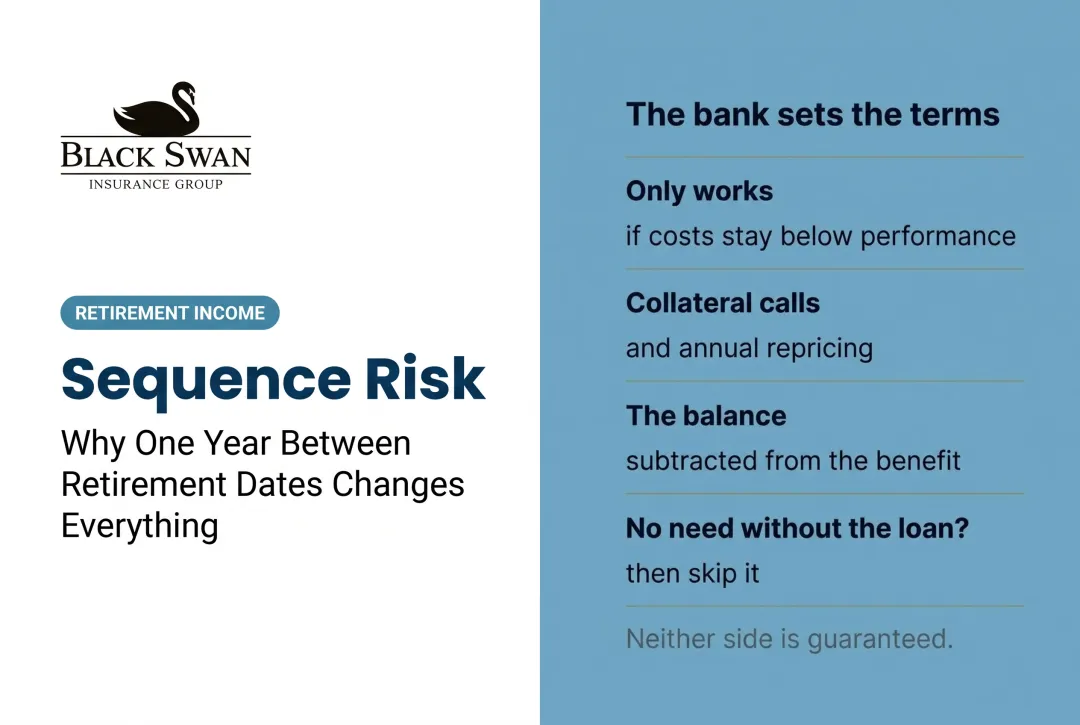
- Sequence-of-returns risk in the first years is the specific danger of retiring early
Step 1: Define the Retirement You Want
Start with specifics rather than a dollar figure. Target date. Downsize, relocate or stay put. Travel, family support, part-time consulting.
Split spending into two buckets:
- Essential costs — housing, insurance, food, utilities, minimum debt payments
- Flexible costs — travel, hobbies, gifting, discretionary upgrades
That split matters later. In a downturn you need to know precisely which expenses must be covered and which can be trimmed without renegotiating your life.
Step 2: Calculate the Income You Need
Review current spending, then adjust. Commuting costs and payroll deductions disappear. Healthcare, travel and home maintenance often rise.
The Bureau of Labor Statistics reported average U.S. household spending of $78,535 in 2024, roughly $6,545 a month, with housing and transportation more than half of that.
Healthcare deserves separate treatment. Fidelity's 2025 estimate puts lifetime healthcare and medical costs at $172,500 for a single 65-year-old retiring in 2025 — assuming Original Medicare and excluding long-term care entirely. Retiring at 60 stacks five extra years of coverage costs on top of that number.
Label your assumptions. A single dollar target hides more risk than it reveals.
Step 3: Inventory Everything
401(k)s, IRAs, Roth accounts, taxable brokerage, cash, pensions, business interests, real estate and life insurance cash value. For each: liquidity — how fast can you reach it without penalty; tax treatment — ordinary income, capital gains or tax-free; and fees and restrictions — surrender charges, early-withdrawal penalties, vesting.
Pull your Social Security estimate and pension statements. Document when each source could realistically start and how that timing shifts everything else.
Step 4: Build and Stress-Test the Plan
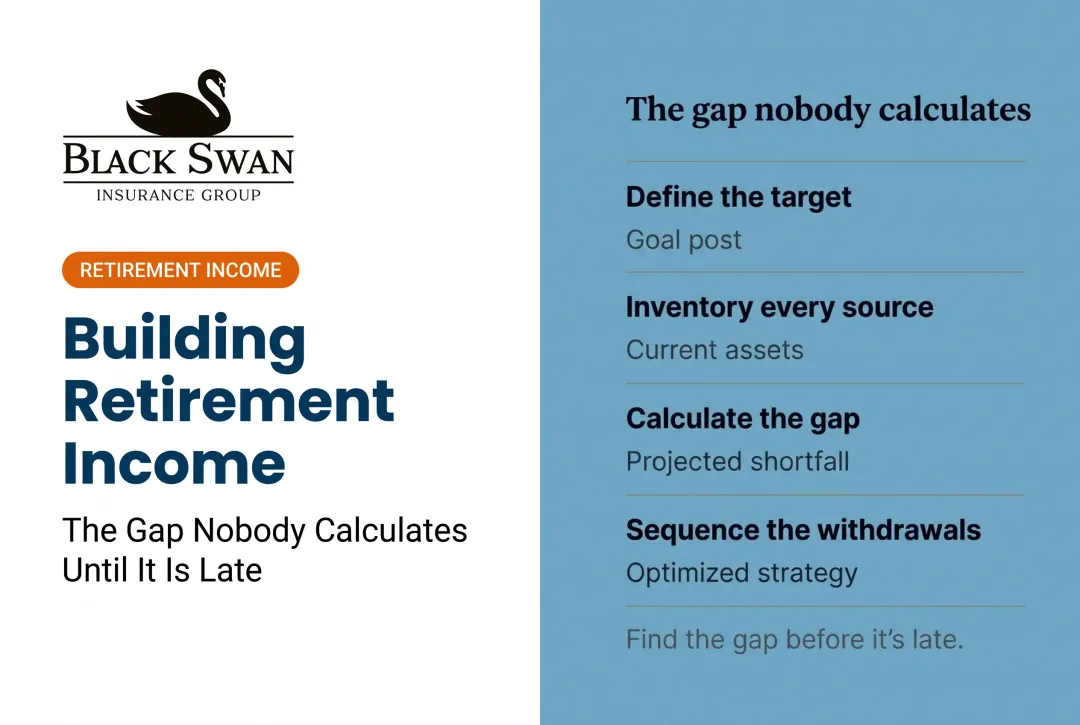
Create a year-by-year cash-flow schedule from 60 through Medicare eligibility and into your Social Security claiming years.
Then run three scenarios:
- Conservative — lower returns, higher inflation, longer lifespan
- Expected — your base case
- Adverse — a market decline in the first few retirement years, plus unexpected healthcare or family costs

Confirm every assumption against current IRS, Social Security Administration and Medicare guidance. Rules change — verify contribution limits, claiming ages and Medicare premiums against the current year's publications before locking anything.
The Five Factors That Decide It
There is no universal magic number. What you need depends on annual spending, guaranteed income, tax position, account mix, investment risk and how long the retirement has to last.
- The healthcare bridge, 60 to 65. Cover it with employer coverage, COBRA (typically up to 18 months), marketplace plans with possible subsidies, or an HSA if eligible. Budget premiums plus cost-sharing; costs vary widely by state and age
- Social Security timing. Benefits generally cannot start until 62, and claiming early permanently reduces the cheque. Claiming at 62 with a full retirement age of 67 cuts benefits by roughly 30%; delaying to 70 increases them further
- Tax diversification. Traditional accounts defer, Roth grows tax-free, taxable brokerage triggers capital gains. The mix matters — withdrawals can raise your bracket or your Medicare premiums later
- Sequence-of-returns risk. A market drop in the first retirement years can permanently damage a portfolio even when long-term averages look fine. Cash reserves and a rebalancing plan absorb some of that shock
- Debt, dependents and legacy goals. A mortgage, support for adult children, a concentrated business or long-term care plans all reduce the flexibility you actually have
Hope is not a retirement strategy. A plan that only works if the first five years cooperate is a bull-market assumption wearing a suit.
What the Critics Get Right
Anyone sceptical of financial content that arrives at "and this is where an insurance product helps" is reading correctly, and this page should be read that way too.
Critics are right that most people planning to retire at 60 need a spending plan and a withdrawal sequence far more than they need a new financial product. They are right that annuities and permanent insurance get recommended into this situation frequently and appropriately rarely. And they are right that the healthcare bridge and the Social Security decision will move the outcome more than any product on the market.
So the honest framing: the work below on spending, sequencing and stress-testing is the plan. Guarantees and insurance are tools that address specific risks within it, for some households, after that work is done.
What to Prepare
Financial records: recent account statements and a detailed spending history; your Social Security estimate, pension documents and recent tax returns; insurance policies and current debt balances; and a current business valuation if you own a company.
Healthcare and protection: confirm exactly how you will cover healthcare before Medicare starts at 65, budgeting premiums and cost-sharing rather than the sticker price. Review disability and long-term care exposure, and who still depends on your income or life insurance.
Business owners have extra work: succession planning, buy-sell agreements, key-person exposure and liquidity held outside the business.
Spending, Withdrawals and Sequencing
The 4% rule came from Bill Bengen in 1994 using historical market data. More recent research uses forward-looking estimates instead — Morningstar's framework, assuming a 30-year horizon and a 90% success probability, sets the safe withdrawal rate at 3.7% for 2024.

These are research estimates, not guarantees. Your rate should reflect your portfolio mix, spending needs and how long a retirement starting at 60 may run — which could be thirty-five years.
Account order changes more than one year's tax bill. Drawing from taxable, tax-deferred and Roth accounts in different sequences also affects how much Social Security becomes taxable, whether you cross Medicare IRMAA thresholds, and how long tax-advantaged balances last. There is no single correct order; it depends on balances and bracket each year.
Liquidity and Guarantees
Before committing money anywhere, check how fast you can reach it and whether early withdrawal triggers a penalty or surrender charge.
| Annuity type | How it works | Key limitation |
|---|---|---|
| Fixed | The insurer guarantees a minimum return and payout | Fixed payments typically lack inflation adjustment |
| Immediate | A lump sum converts to income, usually starting within a year | Liquidity is reduced once annuitised |
| Fixed indexed | Returns tied to a market index with some downside protection | Caps, participation rates and fees can change over time |
Surrender periods often run six to ten years, and annuity guarantees rest on the issuing insurer rather than FDIC or SIPC protection.
Where life insurance fits, and where it does not. If you are retiring at 60 with a mortgage, a dependent, or a business obligation still outstanding, a protection need exists and should be priced — and where it has an end date, term insurance covers it far more cheaply than anything permanent. Permanent coverage with cash value earns consideration where the need genuinely outlasts a term, and any potential tax-advantaged access from such a policy is conditional on it being properly structured, funded and managed. Not everyone retiring at 60 needs one, and most do not.
The Ultimate IUL Blueprint
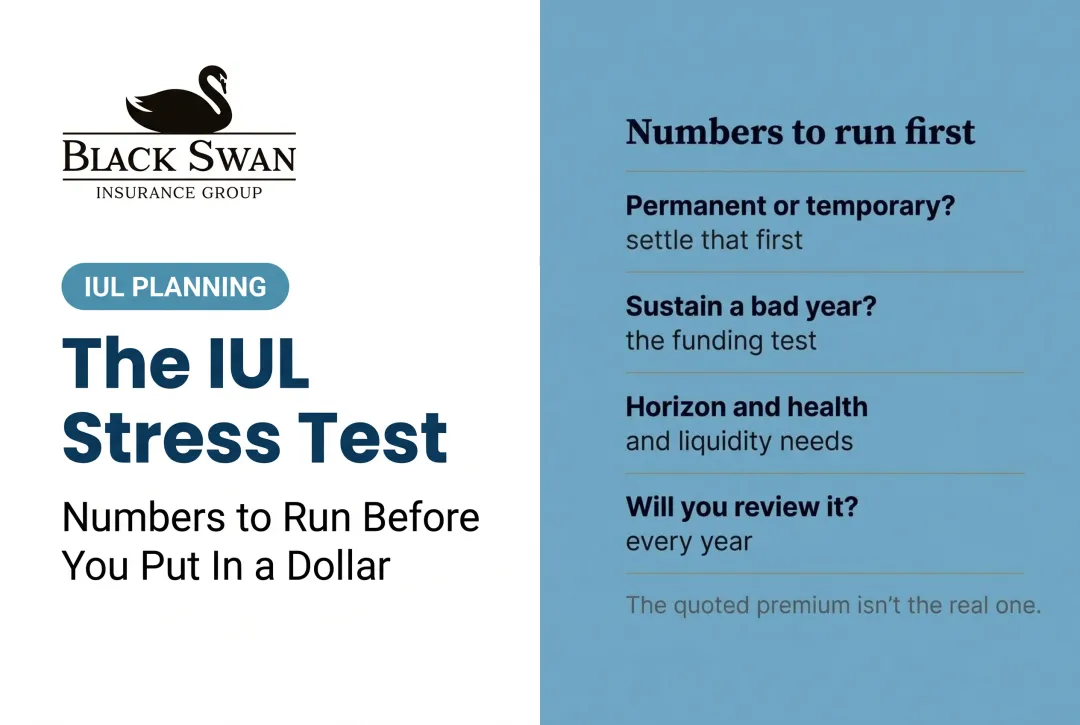
If permanent coverage is part of your picture, the Blueprint covers what determines whether it survives into retirement: funding levels, the MEC line, loan timing and what to demand from an illustration.
Who Can Realistically Do This
Stronger Position
- Household income of $150K+ with a documented spending plan, not an estimate
- A funded healthcare bridge from 60 to 65, costed including cost-sharing
- Meaningful balances across taxable, tax-deferred and Roth accounts for sequencing flexibility
- One to two years of expenses in liquid reserves to absorb a bad first sequence
- Debt cleared or scheduled, and no dependents relying on continued earnings
- Willingness to trim flexible spending after a down year
Weaker Position
- The plan rests on a single dollar target with no scenario testing
- Healthcare between 60 and 65 is unbudgeted or assumed
- Nearly all assets sit in tax-deferred accounts, leaving no sequencing room
- A mortgage or adult-children support continues with no plan to fund it
- Claiming Social Security at 62 is the fallback rather than a decision
- Wealth is concentrated in a business with no liquidity outside it

Part-time work deserves more respect than it usually gets in these plans. A modest earned income across the bridge years reduces portfolio withdrawals at exactly the moment sequence risk is highest, and it buys flexibility on the Social Security decision.
Risks to Understand Before You Set a Date
Not everyone should buy an IUL. Retiring at 60 with a fully funded bridge and no dependents is a reason to skip permanent coverage, not to add it.
- Sequence-of-returns risk in the first years can permanently reduce what the portfolio supports
- The healthcare bridge is five years of full cost, and Fidelity's $172,500 estimate starts at 65 and excludes long-term care
- Claiming Social Security at 62 permanently reduces the benefit by roughly 30% against a full retirement age of 67
- IRMAA and Social Security taxation thresholds can be crossed by a poorly sequenced withdrawal
- Inflation across a 35-year retirement erodes any income that does not adjust
- Annuity surrender periods run six to ten years, and guarantees depend on the insurer's claims-paying ability
- Longevity amplifies every other risk on this list
- Long-term care is excluded from most retirement cost estimates and is the largest uncovered exposure for most households
Find Out Where You Actually Stand
This starts with the Tax-Free Wealth Blueprint Fit Review. If you earn $150K+ and are targeting 60, we cost the healthcare bridge properly, model the withdrawal sequence against IRMAA and Social Security taxation, test a poor first five years, and price protection only for needs that genuinely exist. If it does not fit, we will tell you that too — including if the honest answer is working two more years.
Frequently Asked Questions
What is the hardest part of retiring at 60?
The five-year gap before Medicare, combined with sequence-of-returns risk in the same window. Both land at once, and the healthcare cost is the one people underbudget.
How much do I need?
There is no universal figure. It depends on spending, guaranteed income, tax position, account mix and longevity. A scenario-tested cash-flow schedule tells you far more than any multiple of income.
Should I claim Social Security at 62?
Only as a decision, not a default. Claiming at 62 against a full retirement age of 67 permanently cuts the benefit by roughly 30%. Delaying increases it, and the right answer depends on your other income and your health.
Is the 4% rule still valid?
It is a starting point from 1994 historical data. Forward-looking research puts safe withdrawal rates lower — Morningstar's 2024 framework says 3.7% over 30 years at a 90% success probability. A retirement starting at 60 may need to last longer than either assumes.
Do I need life insurance in retirement?
Only if a protection need exists — a mortgage, a dependent, a business obligation or an estate liquidity gap. Where it has an end date, term insurance covers it cheaply. Where none exists, you do not need coverage.
Does part-time work really help?
Materially. Earned income across the bridge years reduces portfolio withdrawals when sequence risk is highest and buys flexibility on the Social Security decision.
Sources
- EBRI — 2025 Retirement Confidence Survey
- Bureau of Labor Statistics — Consumer Expenditure Surveys
- Fidelity — 2025 retiree health care cost estimate
- Social Security Administration — early retirement benefit reduction
- NAIC — Life Insurance
Disclosure: This article is educational and is not personal tax, legal or investment advice. Indexed universal life is life insurance first. Contribution limits, claiming ages, Medicare premiums and tax rules change; verify current figures before acting. Annuity and insurance guarantees are subject to the claims-paying ability of the issuing insurer and are not FDIC or SIPC protected. Investments can lose value. Actual results depend on policy design, carrier, crediting options, caps, participation rates, expenses, funding and ongoing management. This strategy is not appropriate for everyone. Policy loans and withdrawals reduce cash value and the death benefit, and can create tax consequences if the policy lapses or becomes a modified endowment contract. Indexed universal life is life insurance first. Illustrated values are not guarantees; actual results depend on policy terms, crediting, costs and funding. Consult your own tax, legal and financial professionals for advice specific to your situation.
And remember, it's not what you earn, it's what you keep… enjoy the ride.