By Robert Balgac, Founder, Black Swan Insurance Group | October 5, 2026
You max the 401(k) and the IRA, and there is still surplus cash flow. The question of where it goes is the one that starts almost every conversation I have with a $150K+ earner.
Two answers turn up constantly: an indexed universal life policy, or a taxable brokerage account. They get compared as though they were competing versions of the same thing. They are not in the same category.
One is permanent life insurance with a cash-value feature. The other is direct ownership of stocks, bonds and funds. Taxes, liquidity, market risk, insurance protection and funding discipline all work differently in each, and the comparison collapses if you pretend otherwise.
The short answer: An IUL pairs a permanent death benefit with index-linked cash value; a brokerage account gives direct market exposure. Caps, participation rates and charges mean policy crediting rarely matches raw index returns. Brokerage accounts win decisively on liquidity, transparency and simplicity. A policy can add tax diversification and lifelong protection — but only where a genuine permanent insurance need exists. If there is no such need, this comparison has an obvious answer.
Key Takeaways
- An IUL pairs a permanent death benefit with index-linked cash value; a brokerage account offers direct market exposure
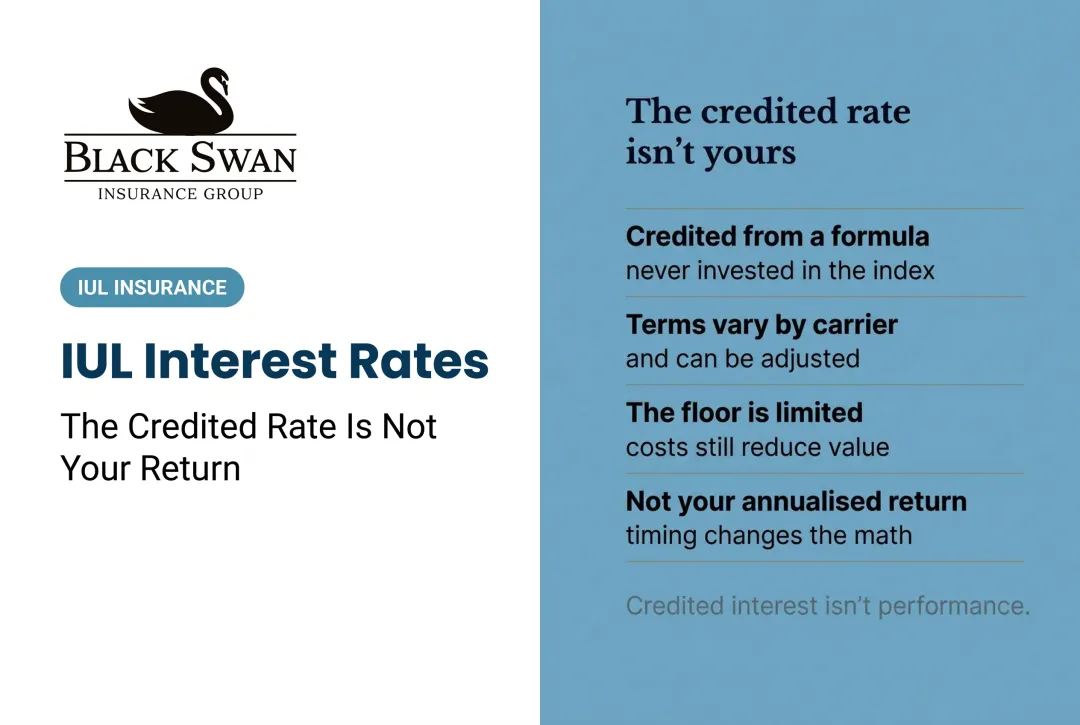
- Caps, participation rates and charges mean policy crediting rarely matches raw index returns
- Brokerage accounts win on liquidity and simplicity; a policy can add tax diversification and lifelong protection
- Review guaranteed and non-guaranteed illustrations; never rely on one projected rate
- The deciding question is whether a permanent protection need exists, not which grows faster
The Core Comparison
| Factor | IUL | Brokerage account |
|---|---|---|
| Ownership | Life insurance contract; cash value credited via an index-linked formula | Direct ownership of securities and funds |
| Tax treatment | Tax-deferred growth; potential tax-advantaged loans and withdrawals while non-MEC and in force | Dividends, interest and realised gains taxed annually |
| Growth potential | Capped by participation rates and caps; floor limits negative crediting | Full upside and downside market exposure |
| Liquidity | Loans and withdrawals possible, reducing cash value and risking lapse | Sell or transfer assets freely |
| Death benefit | Built-in and permanent | None; value passes as-is to beneficiaries |
Structure
An IUL policyholder owns no securities. Premiums fund the death benefit, cover policy expenses, and build cash value credited on an external index's performance. The money is never invested in the index.
A brokerage account gives you the actual shares, bonds or fund units. Value moves directly with the market, both ways.
Tax
Cash value grows tax-deferred. When properly structured, funded and managed, kept in force, and not classified as a modified endowment contract, loans and withdrawals may offer potential tax-advantaged access. That outcome is fact-specific and warrants review by a tax professional.
Brokerage accounts are taxed as you go. Dividends and interest are generally taxable in the year received, and long-term capital gains for 2025 are taxed at 0%, 15% or 20% depending on income, with short-term gains taxed as ordinary income.
Risk and Growth
The policy's crediting floor limits negative index crediting — which is not the same as guaranteeing cash value will not decline. Cost of insurance, administrative charges and loan interest can erode value even when the index performs perfectly well.
Brokerage accounts carry direct market risk with no floor. Losses are real and immediate, and so is the upside, because nothing caps a strong year.

Liquidity
Policy liquidity comes through loans and withdrawals, which reduce cash value and can lower the death benefit, may trigger surrender charges in the early years, and can push an underfunded policy toward lapse.
Brokerage assets are simply easier to reach. Sell what you need when you need it — though selling can trigger capital gains tax or lock in a loss at a bad moment.
How the Policy Works
Permanent life insurance with flexible premiums, a death benefit and a cash-value component credited on an index-linked formula. Premiums split three ways: policy costs, the death benefit, and cash value. Early-year expenses are often front-loaded, so cash value builds more slowly than a simple projection suggests.
- Cap rate — the maximum credited interest for a period
- Participation rate — the percentage of index gain applied
- Floor — the minimum credited rate, often 0%
- Crediting method — annual point-to-point, monthly averaging, or other formulas
- Reset periods — typically 12-month segments after which a new starting point is set
Terms differ by contract and carrier. Check the policy language rather than assuming industry norms.
Zero is your hero in a down year — but the floor applies to the credit, not to the charges. Monthly deductions continue regardless, and in a flat year they can outpace crediting.
Loans and Lapse
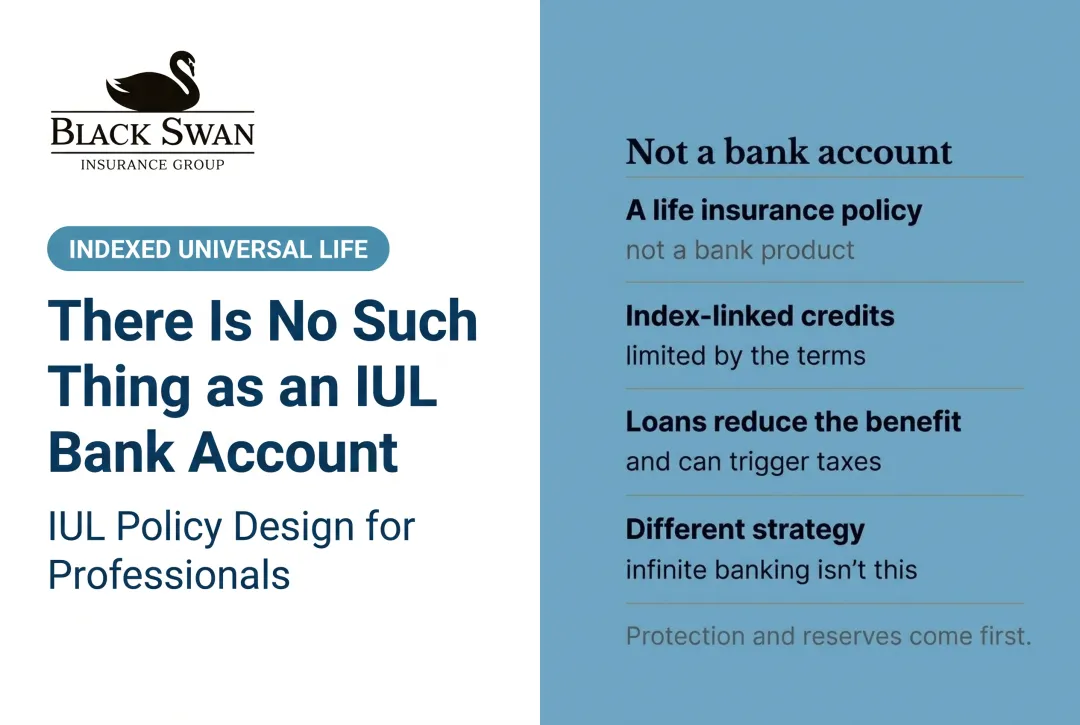
Policy loans accrue interest and reduce both cash value and death benefit. If a loan plus accrued interest exceeds available cash value, the policy lapses — and a lapse with an outstanding loan and gain in the contract can create a taxable event with little or no cash received.

This is not rare. A joint NAIC, SOA and LIMRA study covering 2015–2021 found IUL lapse rates increased notably across policy years, with IUL the only product type consistently higher during the pandemic period. Underfunding is documented, not theoretical.
How the Brokerage Account Works
A taxable account holding stocks, bonds, mutual funds, ETFs or cash equivalents. Results depend entirely on what you hold and how the market performs, with no insurance wrapper softening the outcome.
Advantages: broad investment choice with no carrier limitations; transparent account value at any moment; flexible contributions and withdrawals with no underwriting; direct alignment with your own risk tolerance and horizon.
Tax mechanics: dividends and interest generally taxable in the year received; assets held over a year can qualify for preferential long-term capital gains rates; short-term gains taxed as ordinary income; tax-loss harvesting can offset gains, subject to wash-sale rules.
The risks worth naming. Market volatility is the obvious one. Sequence-of-returns risk matters more in retirement. Vanguard's research on retirement cohorts found retirees who hit a full bear-market sequence early were 31% more likely to outlive their wealth, with 21% average shortfalls against 10% for milder sequences. That is a structural risk of holding assets with no floor during withdrawal years.

A brokerage account also has no death benefit. Beneficiaries receive what the account is worth, though beneficiary designations and inherited-asset basis rules still matter for estate planning.
What the Critics Get Right
On the accumulation question specifically, the brokerage side wins, and conceding that is the only way the rest of this is worth reading.
Critics are right that a capped, dividend-excluded credit reduced by a monthly cost of insurance will trail a low-cost index fund across most long stretches. They are right that transparency and daily liquidity are genuine advantages a policy cannot match. And they are right that anyone pitching a policy as a superior place to grow money is making a comparison the numbers do not support.
Where the comparison stops being useful is the death benefit. If you need permanent coverage regardless, you are not choosing between these two — you are deciding what the cash value inside coverage you already need should do. That is a narrower question, and it has a different answer.
Which One Fits
Five honest questions:
- What is the purpose of this money — protection, growth, or both?
- Is there a real, ongoing life insurance need?
- What is the time horizon, and can it absorb early policy costs?
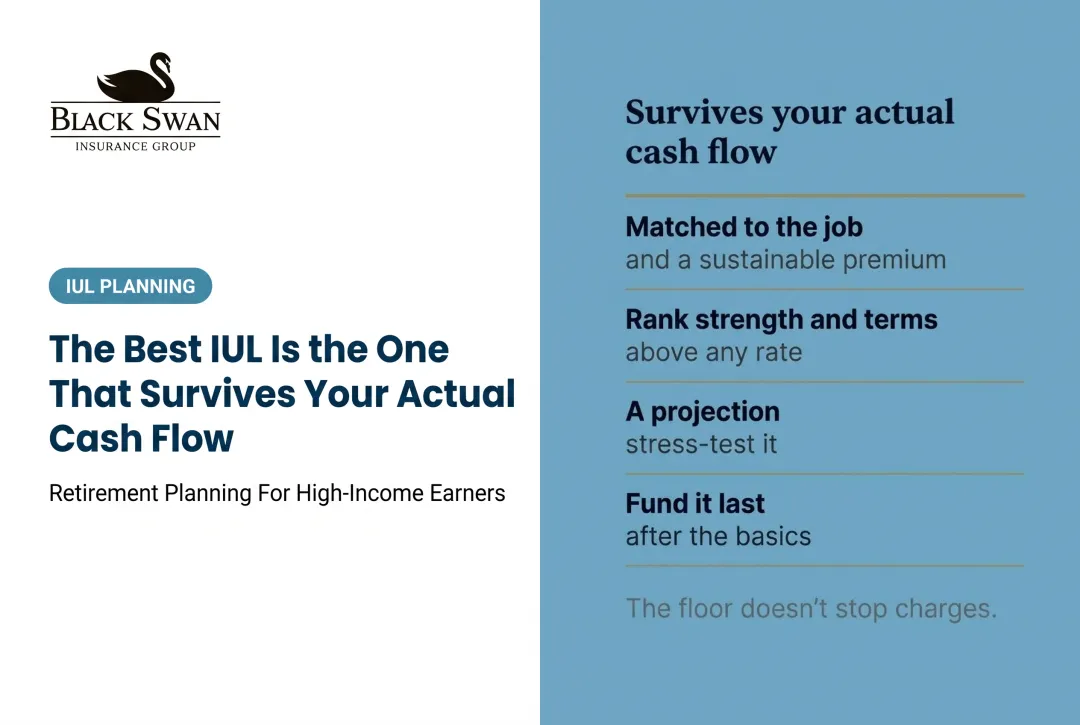
- How stable is your cash flow, and can premiums be sustained for years?
- What is your liquidity requirement — near-term access or long-term patience?
Before committing to either long term, most households benefit from prioritising emergency reserves, high-interest debt payoff and the employer 401(k) match. Circumstances can change that order; those foundations usually come first.
Stronger Fit for a Brokerage Account
- Flexibility, direct market exposure and transparent pricing matter more than permanent protection
- You need near- or medium-term access to funds
- There is no genuine permanent insurance need
- You want to avoid surrender charges and medical underwriting entirely
- Tax-advantaged contribution limits are maxed and you simply need somewhere efficient for the overflow
Stronger Fit for Evaluating an IUL
- A real permanent death benefit need, standing on its own merits
- Household income of $150K+ with surplus cash flow after matching, reserves and other core priorities
- Insurability at reasonable rates
- A long enough horizon to absorb early policy costs
- Genuine value in tax diversification alongside existing pre-tax accounts
Business and practice owners sometimes look here for liquidity outside the business or for family protection planning, though it does not substitute for a qualified business retirement plan or proper business insurance.
Weaker Fit for Either
Not everyone should buy an IUL. If liquidity matters to you more than tax treatment, the brokerage account wins outright.
- Emergency reserves are not yet in place
- High-interest debt is still running
- The employer match is uncaptured
- The need is temporary protection, where term insurance is cheaper and cleaner than either of these
The Ultimate IUL Blueprint
If a permanent need genuinely exists and you are past the framing question, the Blueprint covers the design decisions that follow: funding levels, the MEC line, loan timing and what to demand from an illustration.
Risks to Understand Before You Commit Either Way
- The floor protects the credit, not the balance — charges continue in a 0% crediting year
- Cost of insurance rises with age and is deducted regardless of index performance
- Caps and participation rates are non-guaranteed and can be reduced after you commit
- Surrender charges restrict early liquidity on a policy, often for a decade
- Loans reduce cash value and death benefit, and a lapse with a loan outstanding and gain in the contract creates taxable income with little cash received
- Crossing the seven-pay limit makes the contract a MEC and changes distribution taxation permanently
- On the brokerage side: dividends, interest and realised gains are taxed annually, creating a drag a tax-deferred wrapper avoids
- Sequence-of-returns risk is structural for an unprotected portfolio during withdrawal years
- A brokerage account has no death benefit, which matters where protection is part of the objective
Find Out Where You Actually Stand
This starts with the Tax-Free Wealth Blueprint Fit Review. If you earn $150K+ and are deciding where surplus cash flow goes, we start with whether a permanent protection need exists at all, then compare the policy and the brokerage route on identical assumptions, net of charges and tax. If it does not fit, we will tell you that too — and "fund the brokerage account" is a conclusion we reach regularly.
Frequently Asked Questions
Which grows faster?
A brokerage account, in most long stretches, because there is no cost of insurance and no cap. Growth alone is the wrong basis for this decision if a protection need exists; if none exists, it is the right basis and the answer is clear.
Is the tax treatment better in a policy?
Different rather than better. A policy defers tax on internal growth and can offer conditional access through loans. A brokerage account is taxed annually but offers preferential long-term capital gains rates and full liquidity.
Can I lose money in either?
Yes, in both. A brokerage account can fall with the market. A policy's cash value can fall when charges outpace crediting, and it can lapse entirely if underfunded or over-loaned.
Which is more liquid?
The brokerage account, decisively. Sell when you want, subject to tax. A policy's liquidity runs through loans and withdrawals that reduce the death benefit and can threaten the contract.
Should I use both?
Many households do. The policy handles a protection need and adds tax diversification; the brokerage account handles flexible growth and liquidity. That works when both jobs genuinely exist.
Should I buy term insurance and invest the rest?
If the protection need has an end date, yes, and it deserves pricing first. It works when the difference genuinely gets invested every year, through a bad market.
Sources
- IRS Topic 409 — Capital gains and losses
- NAIC, SOA and LIMRA — 2015–2021 UL lapse study
- Vanguard — Safeguarding retirement in a bear market
- NAIC — Life Insurance Illustrations
- I.R.C. § 7702A and Rev. Proc. 2008-39 (modified endowment contracts and the seven-pay test)
Disclosure: This article is educational and is not personal tax, legal or investment advice. Indexed universal life is life insurance first. Tax rates and rules change; confirm current figures with the IRS or a qualified professional. Actual results depend on policy design, carrier, crediting options, caps, participation rates, expenses, funding and ongoing management. Policy loans and withdrawals may reduce cash value and death benefit and can create tax consequences if the policy lapses or becomes a modified endowment contract. Investments can lose value. This strategy is not appropriate for everyone. Illustrated values are not guarantees; actual results depend on policy terms, crediting, costs and funding. Consult your own tax, legal and financial professionals for advice specific to your situation.
And remember, it's not what you earn, it's what you keep… enjoy the ride.