By Robert Balgac, Founder, Black Swan Insurance Group | October 7, 2026
Wealth transfer used to be a will and a beneficiary form. For affluent families now it is a practice, a rental portfolio, a concentrated stock position, or a business that took thirty years to build — none of which converts to cash on the timetable an estate actually needs.
Cerulli projects approximately $124 trillion will transfer through 2048, much of it locked in exactly those illiquid holdings, according to Cerulli's wealth transfer research.
IUL gets pitched into that gap as a wealth-building tool, a tax hack, a legacy solution. The real case is narrower and more useful than any of those.
The short answer: Where IUL genuinely earns its place in an estate plan is liquidity — cash arriving when heirs would otherwise be forced to sell a business or a property at a discount. That is a real problem and insurance solves it well. What IUL does not do is make itself tax-efficient automatically. Ownership structure, beneficiary designation and funding discipline decide the outcome, and income-tax treatment and estate-tax treatment are two entirely separate questions.
Key Takeaways
- IUL pairs a permanent death benefit with index-linked cash value, bounded by caps, floors and participation rates
- A properly structured policy can create liquidity, equalise inheritances, or preserve a family business
- It is neither a market investment nor an automatic tax-free solution
- Ownership structure, trust design and funding discipline shape outcomes more than the product does
- Compare it against term, whole life, qualified plans and brokerage assets before deciding
The Mechanics, Briefly
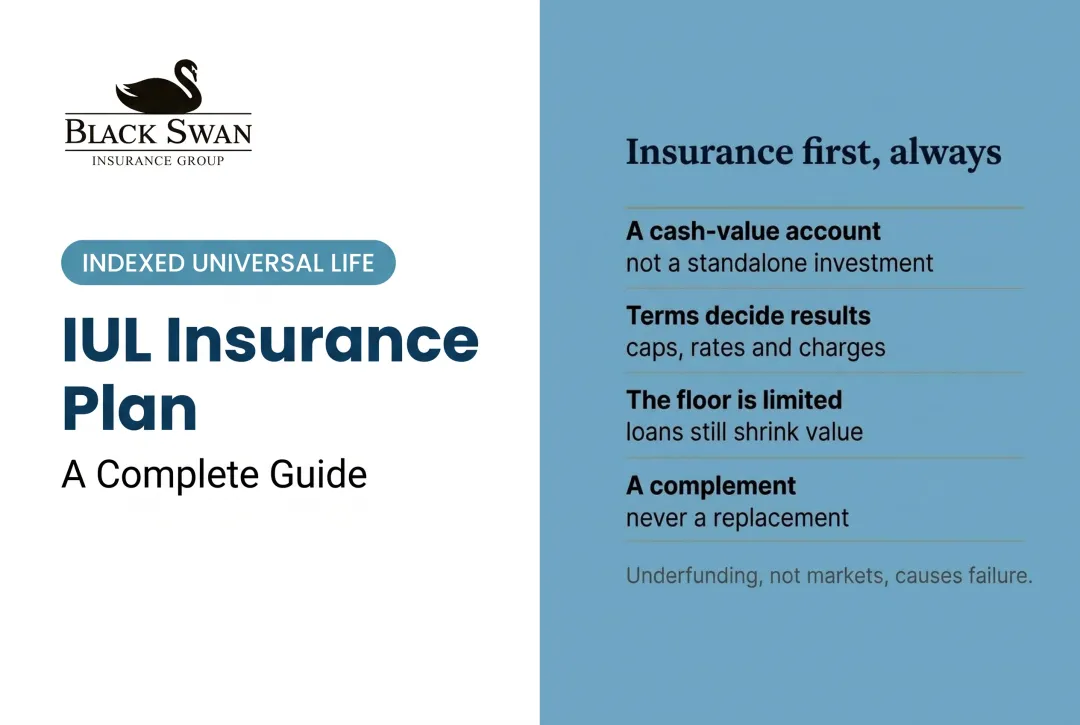
Permanent life insurance carrying a death benefit and building cash value credited by reference to an external index such as the S&P 500.
You never own the index. Pacific Life's own client guide is explicit that IUL policies do "not directly participate" in stock or equity investments — no shares, no index dividends. The insurer calculates a credit from index movement, subject to caps and participation rates.
Performance also depends on premium consistency, insurance costs that rise with age, administrative and rider charges, and the specific contract's crediting formula.
In an estate plan it provides a death benefit for heirs, liquidity for taxes, debts and final expenses, a supplement to other legacy assets, and a complement to trusts and wills — never a replacement for them.
One caution worth stating early: loans and withdrawals reduce both cash value and death benefit, raise lapse risk, and can trigger tax. Check current carrier illustrations and IRS guidance rather than relying on generic "tax-free" claims.

Where It Genuinely Helps
Liquidity, Which Is the Real Argument
When an estate holds a business, real estate or other illiquid assets, a death benefit supplies cash exactly when it is needed — covering final expenses and debts, supporting a surviving spouse, equalising inheritances where one child takes the business, and buying heirs time so nothing is sold at a discount.
IRS guidance generally excludes life insurance death proceeds from a beneficiary's gross income. Exceptions exist, including the transfer-for-value rule, which can limit the exclusion where a policy changed hands for consideration. Administration around ownership changes matters here more than most people are told.
Before relying on it, map the death benefit against actual liquidity need, your estate's composition, beneficiary circumstances, and any business-continuity requirement.
Lifetime Flexibility, With Real Trade-offs
Cash value can be accessed through loans or withdrawals while you are alive. Loan interest accrues and compounds, both reduce cash value and death benefit, unpaid loans can force additional premium to keep the contract alive, and a lapse or surrender with a loan outstanding can create taxable income.
This is not guaranteed retirement income, and it is not a substitute for emergency savings, maxed qualified contributions or a diversified brokerage account.
The Ultimate IUL Blueprint
Before a policy is built into an estate plan, the Blueprint covers what the design must survive: funding levels, charges, the MEC line, loan timing, and what to demand from an illustration.
The Distinction Almost Everyone Misses
Cash value grows tax-deferred, and under the right conditions loans and withdrawals can be received income-tax-free. Conditional, not automatic.
The MEC rule bites here: cumulative premiums exceeding the seven-pay limit in the first seven contract years make the policy a Modified Endowment Contract, and MEC distributions tax income-first. Overfunding to accelerate cash value triggers this by accident with some regularity.
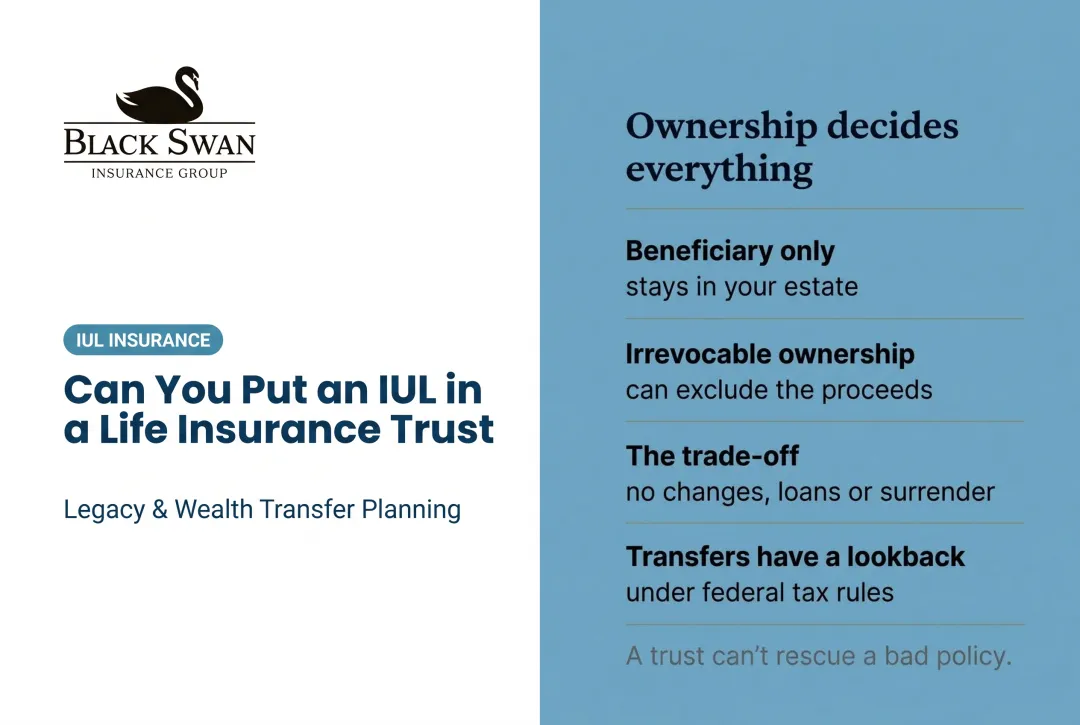
And then the big one: income-tax treatment and estate-tax treatment are separate questions. A death benefit can be income-tax-advantaged for the beneficiary while still being pulled into the insured's taxable estate, depending on who owns the policy and what control the insured retained.

That is where ownership structure, beneficiary designations and an irrevocable life insurance trust come in — work for an estate attorney and a tax adviser, not a form change.
What the Critics Get Right
The sharp criticism is that life insurance gets sold as estate planning to families who have no estate-tax exposure at all.
Most households are well under the federal threshold. For them, an ILIT is cost and complexity solving a problem they do not have, and the liquidity argument only holds if the estate is genuinely illiquid. When the insurance recommendation and the trust recommendation arrive together from parties who both earn on it, that deserves scrutiny.
Where the criticism fails is with the practice owner whose estate is 80% one business, or the family equalising between a child who runs the company and two who do not. That liquidity problem is real, immediate, and not solved by a brokerage account.
What Goes Wrong When Nobody Coordinates It
A policy never aligned with the rest of the plan creates insufficient liquidity exactly when cash is needed, unintended unequal inheritances, difficulty supporting minor or inexperienced beneficiaries, avoidable lapse from outdated funding assumptions, and the rushed sale the policy was bought to prevent.
Ownership mistakes are common. Naming a trust as beneficiary is not the same as making the trust the owner — a distinction that defeats the entire purpose of an ILIT. Transferring an existing policy into a trust without reviewing gift-tax and estate-tax implications, including the three-year lookback, backfires the same way.
Skipping reviews compounds it: outdated illustrations that no longer reflect crediting history, obsolete beneficiary designations after a divorce or death, changed assumptions, and premiums that no longer support the intended duration.

Getting It Right
Start with suitability. Is permanent coverage actually required, or would term meet the need? Who needs the death benefit, and for how long? How much can you fund sustainably, year after year? Does your horizon match the design? Are you insurable at a rate that makes the strategy worth running?
Compare honestly against term, whole life, qualified plans, Roth contributions, brokerage accounts, annuities, business succession tools and trusts. For late-start high earners and business owners with a compressed window, start with liquidity reserves and existing obligations.
A responsible evaluation sometimes concludes IUL is not appropriate. That is a legitimate answer, not a failed meeting.
| Structure | Who controls it | Typical estate impact |
|---|---|---|
| Personally owned | The insured | Often included in the taxable estate |
| Trust named as beneficiary only | The insured still owns it | May still be included in the estate |
| ILIT owns and is beneficiary | The trustee | Can be excluded if structured correctly |
No structure is universally better. Get input from your insurance professional, estate attorney, CPA and trustee before any ownership or beneficiary change — and remember that irrevocable structures trade flexibility for exclusion, permanently.
Stronger Fit
- Earning $150K+ with surplus cash flow after reserves, debt and maxed retirement contributions
- An estate concentrated in a business, practice or real estate
- Blended-family dynamics or beneficiaries needing structured support
- Plausible exposure to federal or state estate tax
- Willingness to review the policy annually
Weaker Fit
Not everyone needs this. Step back if you:
- Have a modest estate and straightforward beneficiaries
- Lack liquidity reserves or carry high-priority debt
- Cannot sustain funding for decades
- Have no genuine permanent protection need — term is cheaper and sufficient
- Are being sold a trust alongside a policy without anyone checking your estate against the threshold
Risks to Understand Before You Build a Plan Around It
- Ownership errors can void the whole purpose — beneficiary designation is not ownership.
- The three-year lookback applies to transfers of existing policies into a trust.
- MEC status is generally permanent and changes loan and withdrawal taxation.
- Caps and participation rates can fall, and cost of insurance rises with age.
- Lapse with a loan outstanding creates taxable income at the worst possible time.
- Thresholds and rules change. What worked five years ago may not hold now.
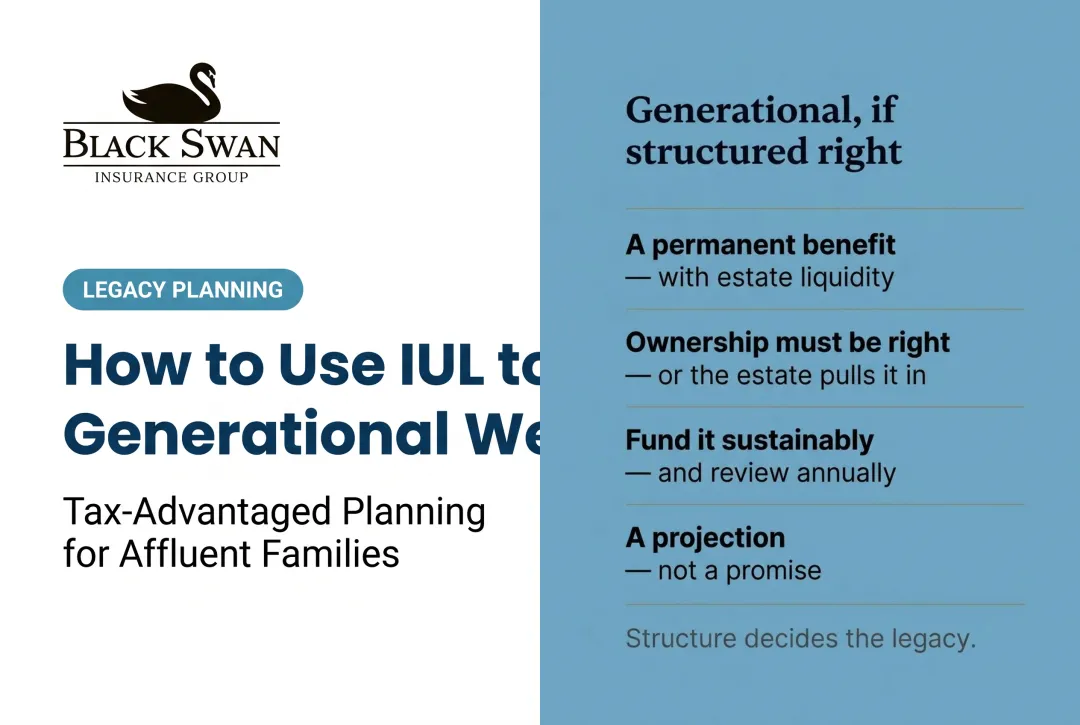
This is not set-it-and-forget-it. It is design-it, fund-it, review-it.
An annual review should cover premiums, cash value and death benefit; crediting assumptions, caps and participation rates; fees, loans and withdrawals; and beneficiary designations against projected sustainability. Marriage, divorce, births, deaths, business changes, asset sales, retirement, health changes and shifts in estate-tax law all warrant a fresh look.

Find Out Where You Actually Stand
This starts with the Tax-Free Wealth Blueprint Fit Review. If you earn $150K+ and your estate is concentrated in something that cannot be sold quickly, we work out the actual liquidity gap first, then model the funding against the MEC limit and stress-test it through lower-crediting and zero-credit years. Trust drafting and tax decisions stay with your estate attorney and CPA — we will say so plainly. If IUL does not fit, we will tell you that too.
Frequently Asked Questions
Is the IUL death benefit always tax-free?
Death proceeds are generally excluded from a beneficiary's federal gross income, but exceptions exist including the transfer-for-value rule. Income-tax treatment is separate from estate-tax treatment, so ownership still affects estate exposure.
Should I own the policy personally or through a trust?
Personal ownership is simpler but typically keeps the policy in your taxable estate. An ILIT can keep proceeds out when it owns the policy and is the beneficiary — but it needs careful attorney drafting and it is irrevocable.
What happens if proceeds go to my estate?
They usually pass through probate, losing direct beneficiary control and probate avoidance. Review ownership and beneficiary designations with qualified legal and tax professionals.
What is a MEC and why should I care?
An overfunded policy failing the IRS seven-pay test. It changes loan and withdrawal taxation to income-first treatment. Staying inside the limit during funding and any later premium change preserves the favourable treatment.
What is the best way to transfer wealth to adult children?
It depends on your assets, tax position, timing and how prepared they are. Life insurance, trusts, direct gifts and coordinated beneficiary designations usually work together rather than as a single solution.
Do I need this if my estate is under the federal threshold?
Often no, at least not for estate-tax reasons. But several states impose much lower exemptions, and the liquidity argument can still apply if your wealth is concentrated in something illiquid. Check both before deciding.
Sources
- Cerulli — $124 trillion wealth transfer through 2048
- IRS — Life insurance and disability insurance proceeds
- NAIC — Life Insurance
- NAIC — Life Insurance Illustrations
Disclosure: This article is educational and is not personal tax, legal or investment advice. Indexed universal life is life insurance first. Trust drafting, ownership structuring and estate-tax outcomes depend on your own documents, state law and circumstances, and require a licensed attorney and tax professional. Estate-tax thresholds and insurance tax treatment change over time and should be confirmed currently. Illustrated values are not guarantees; actual results depend on policy terms, crediting, costs and funding. Actual results depend on policy design, carrier, crediting options, caps, participation rates, expenses, funding and ongoing management. This strategy is not appropriate for everyone. Policy loans and withdrawals reduce cash value and the death benefit, and can create tax consequences if the policy lapses or becomes a modified endowment contract. Consult your own tax, legal and financial professionals for advice specific to your situation.
And remember, it's not what you earn, it's what you keep… enjoy the ride.