By Robert Balgac, Founder, Black Swan Insurance Group | October 7, 2026
The word "guarantee" is doing a great deal of work in this product's name, and most buyers hear it as "this policy cannot fail". That is not what it means.
A zero-lapse guarantee keeps an Indexed Universal Life death benefit in force even when cash value runs low — provided you hold up your end of a contract most people never read closely. It says nothing about index crediting, nothing about retirement income, and nothing about your freedom to skip a payment.
The short answer: The guarantee protects the death benefit under specific premium, timing and policy conditions. It does not guarantee cash-value growth, caps, participation rates or loan rates. You can satisfy the guarantee perfectly, keep your full death benefit, and still end up with a policy holding no accessible cash value at all. Both outcomes can be true at once.
If you earn $150K+ and have been shown this as the safe version of IUL, that last sentence is the one worth sitting with.
Key Takeaways
- The guarantee protects the death benefit, not cash-value growth or future income
- Missing premium deadlines or taking loans can void it, depending on contract terms
- Guaranteed and non-guaranteed illustration columns must be read separately
- GUL prioritises guaranteed protection; IUL adds index-linked potential and far more moving parts
- Annual reviews matter more here than with a simpler guaranteed product
How the Guarantee Actually Functions
A zero-lapse (or no-lapse) guarantee is a contractual promise: the death benefit stays in force as long as you meet specific premium, timing and policy-condition requirements, even where cash value could not otherwise support it under standard lapse rules.
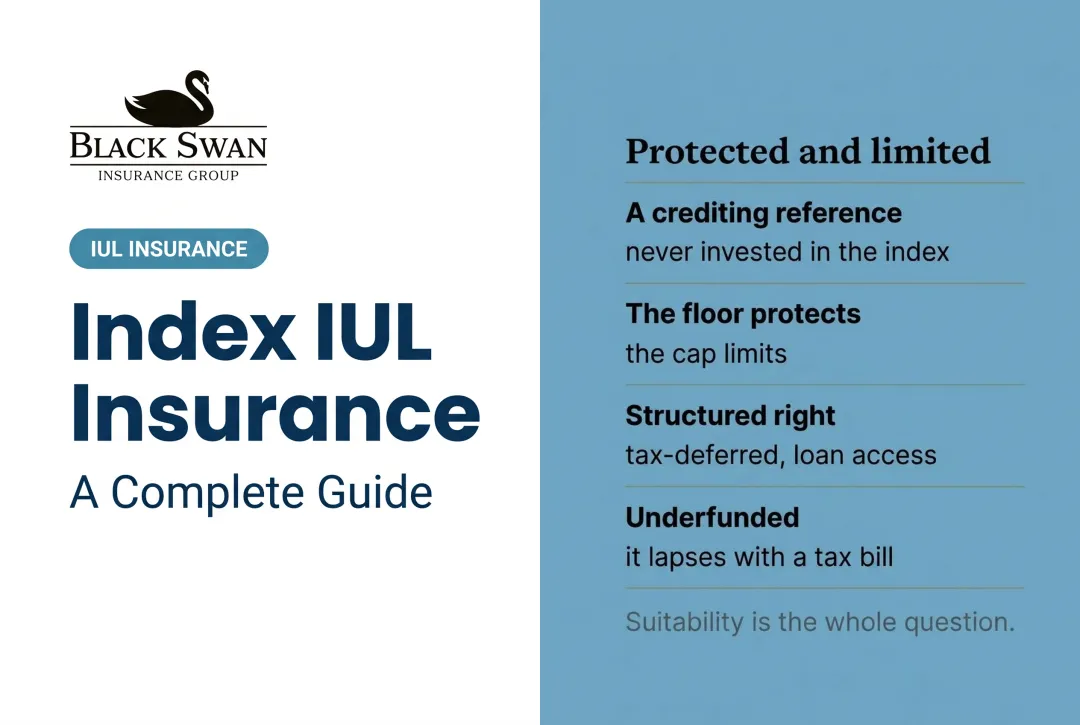
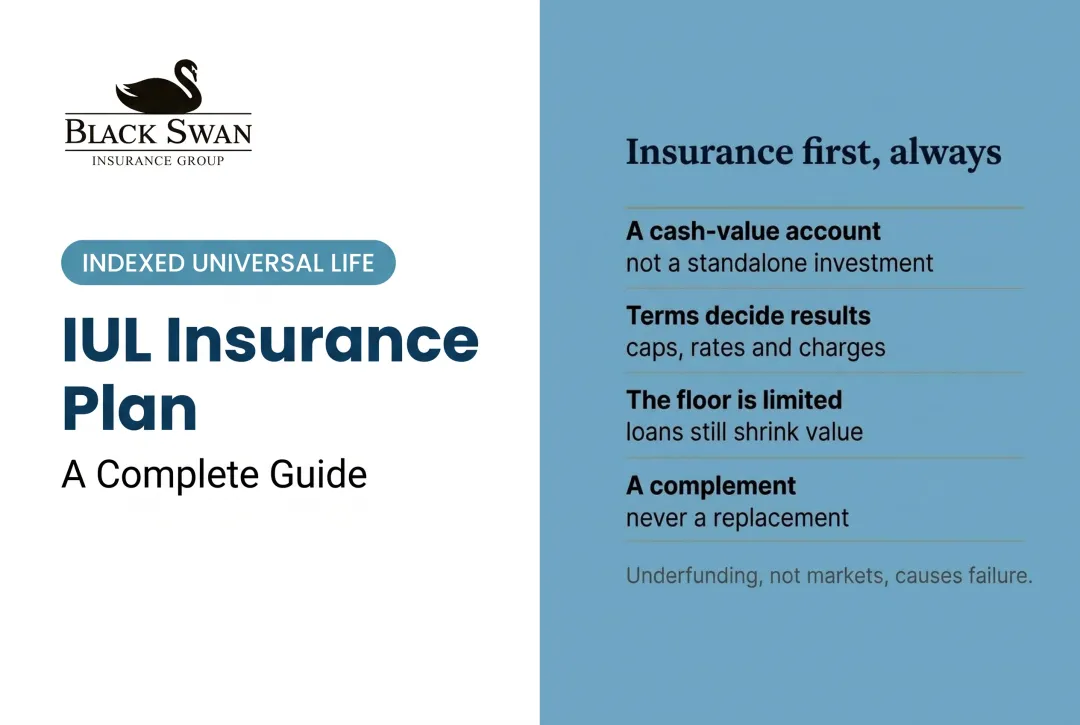
That matters because an IUL has two moving parts — a permanent death benefit, and a cash-value account credited by reference to an index subject to caps, participation rates, spreads and a floor. The policy is never invested in the market; it only references an index to determine crediting.
Under ordinary lapse rules, a UL or IUL stays active while its account value covers monthly charges. Once that value is exhausted, the policy lapses unless you fund it back up.
A secondary guarantee works differently. The Society of Actuaries classifies IUL with secondary guarantees as a design category built around a long-term death-benefit guarantee — in its survey definition, lasting at least to age 90, sitting either in a rider or the base policy. That is a product category, not something every IUL contract includes automatically.
Insurers test it one of two ways: a cumulative-premium test, comparing premiums paid and adjusted by contract factors against required cumulative premiums; or a shadow-account test, comparing a separate contract-defined calculation — not your accessible cash value — against the funding needed to support the guarantee.

A hypothetical. A policy's accumulation account reaches $0 by year 15 after weak crediting. Without a guarantee, it lapses. With the guarantee satisfied, the $500,000 death benefit stays in force — and there is nothing left to borrow against for tuition or supplemental income.
That is the trade in a sentence. The protection survives. The living-benefit story does not.
What It Does Not Guarantee
| Element | Typically guaranteed? |
|---|---|
| Death benefit (contract terms met) | Yes |
| Index crediting rate | No |
| Cap / participation rate | No — can change |
| Cash-value accumulation | No |
| Future premium flexibility | No — often limited by rider terms |
The guarantee is an obligation of the issuing insurer, backed by its financial strength and claims-paying ability. It is not a promise from the agent, the brochure or the marketing page.
And it does not always run for life. Some riders guarantee to a stated age — 90 or 95. Others need a separate rider at issue to extend further. Duration and conditions live in the formal rider language and the guaranteed column, not the cover letter.
An illustration is a model, not a guarantee.
Before treating "zero-lapse" as settled, confirm the rider's exact name, its stated duration and its precise premium conditions. Marketing language and contract language are not reliably the same thing.
The Ultimate IUL Blueprint
Before you sign a no-lapse rider, the Blueprint covers what the design has to survive: funding levels, charges, the MEC line, loan timing, and what to demand from an illustration.
How It Compares
| Policy type | Cash-value mechanism | Death-benefit approach |
|---|---|---|
| IUL with zero-lapse guarantee | Index-linked crediting with caps, floors, participation rates | Conditional long-term guarantee via rider or base policy |
| Standard IUL | Same index-linked crediting | Lapses if account value cannot cover charges |
| Guaranteed Universal Life | Minimal, often just enough for the guarantee maths | Built for guaranteed, predictable protection |
| Traditional UL | Carrier-declared interest rates | In force only while funding and credited rates keep pace |
| Variable UL | Separate investment accounts, direct market exposure | No floor, no IUL-style zero-lapse design |
Standard IUL offers the same upside with more lapse risk if crediting underperforms or premiums slip — a deliberate trade, not something to discover in year 20.
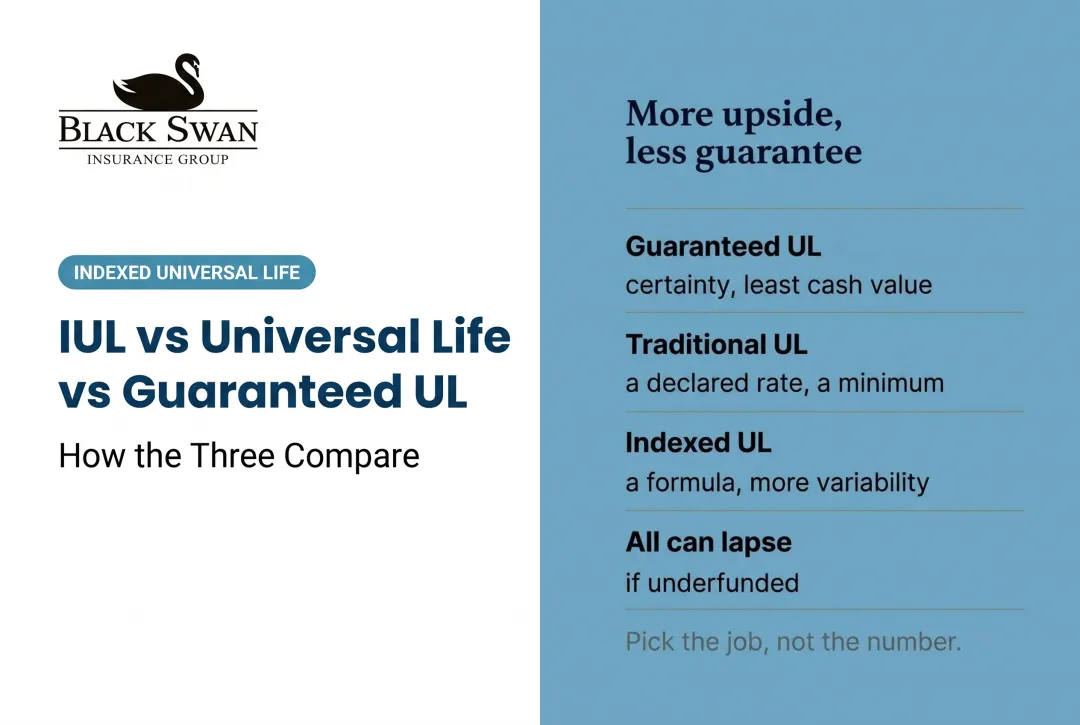
GUL is not built for accumulation. It delivers predictable guaranteed protection at a defined premium with little meaningful cash value. If permanent protection at a known cost is your only goal, GUL usually does that job more simply and more cheaply, and anyone who will not tell you so is not advising you.
Traditional UL depends on declared rates and funding discipline. VUL puts cash value in market sub-accounts, which can fall in a way a floored product cannot.
What the Critics Get Right
The fair criticism is that this product is frequently sold to people who should have bought GUL.
If what you actually want is a guaranteed death benefit for a known premium, GUL delivers exactly that with fewer moving parts and usually less cost. Layering a no-lapse rider onto an IUL to get the same certainty means paying for an accumulation engine you have then funded too thinly to use. You end up with guaranteed coverage and a disappointing cash-value story — which is a coherent outcome, but rarely the one that was described.
Where the criticism overreaches: for someone who genuinely wants both the protection floor and a funded accumulation component, and who will pay the higher premium to get both, the structure does what it says.
Funding — Where This Goes Wrong
Costs run across cost of insurance charged monthly, administrative charges, premium loads, rider charges for the guarantee itself, surrender charges on early exit, and loan interest. All of them affect both the cash-value strategy and the guarantee test.
The guarantee premium is not the max-funding premium. The amount required to satisfy the guarantee is usually different — and often considerably lower — than the amount needed for meaningful accumulation. Pay only the guarantee premium and you protect the death benefit while leaving account value at or near zero.
Compare three numbers on every illustration: the minimum premium satisfying the guarantee, the planned premium you intend to pay, and the illustrated premium assuming non-guaranteed crediting. Fund below the minimum, miss a deadline or reduce the death benefit, and you can fail the guarantee test entirely.
Overfunding has its own ceiling: the seven-pay test under IRC §7702A. The IRS compares cumulative payments in the first seven years against specified net level premiums. Cross it and the contract becomes a Modified Endowment Contract, taxing loans and withdrawals income-first with a possible 10% penalty.

Loans and withdrawals reduce cash value and the death benefit, and unpaid loan interest compounds. Depending on the contract, an outstanding loan can shorten or void no-lapse protection — which is the detail most likely to cost someone their guarantee. If the policy lapses with a loan outstanding, the gain portion can become taxable income.
The loan is not the problem. The unmanaged loan is the problem.
Who It Fits
Stronger Fit
- High-income professionals and executives, often 35–55, who max qualified plans and want tax diversification alongside permanent protection
- Business and practice owners needing protection and assets outside a concentrated, illiquid business
- Affluent families with mortgages, dependants or legacy goals wanting a death-benefit backstop
- Late-start high earners, roughly 45–55, who need a genuine time-horizon suitability review
What they share: protection first, with cash-value growth treated as a secondary, non-guaranteed possibility.
Weaker Fit
Not everyone should buy this. Look elsewhere if you need low-cost temporary coverage — term does that job better; if your income is unstable and the required premium pattern is unrealistic; if you expect large early withdrawals; or if you plan to skip premiums without first checking the effect on the guarantee.
Before proceeding, confirm you have a real permanent need, have already handled term coverage, emergency savings and retirement contributions, are insurable at a reasonable class, can sustain the required premium long term, do not need early liquidity from this policy, and are prepared for annual reviews rather than a one-time purchase.
Risks to Understand Before You Sign
The guarantee fails quietly. The triggers:
- Missed or insufficient required premiums, even by a short window
- Excessive loans or withdrawals reducing supporting value
- Unpaid loan interest accumulating against the policy
- Changes to face amount or death-benefit option
- Treating non-guaranteed illustration assumptions as fixed

Before signing: identify the formal name and stated duration of the no-lapse provision; confirm the exact premium schedule and deadlines; read guaranteed and non-guaranteed ledgers side by side rather than the summary; ask specifically how loans and withdrawals affect the guarantee; check caps, participation rates, spreads and cost-of-insurance assumptions; verify the insurer's financial-strength ratings independently; and schedule periodic reviews.
Stress-test it first — lower crediting, higher charges, reduced premiums, an early withdrawal, a retirement-income loan. If it still works under that pressure, you are looking at a realistic picture.
One genuine point in the structure's favour: a LIMRA and SOA study of universal life lapse experience from 2015 to 2021 found lower lapse rates, by both policy count and insured amount, for IUL with a secondary guarantee than without, across nearly all policy years. That is observed group behaviour, not a promise about your contract.
Find Out Where You Actually Stand
This starts with the Tax-Free Wealth Blueprint Fit Review. If you earn $150K+ and a no-lapse rider is on the table, we read the rider language rather than the brochure, compare the three premium numbers that actually matter, test the design under lower crediting and a missed premium year, and show what the guarantee leaves you in terms of accessible value. If GUL would give you the same certainty for less, we will say so. If IUL does not fit, we will tell you that too.
Frequently Asked Questions
What is a no-lapse guarantee?
A design where the death benefit stays in force when contractual premium and timing requirements are met, even if cash value runs low. Conditions vary significantly by carrier and rider.
Does IUL have a guaranteed death benefit?
Only where a no-lapse or secondary guarantee rider is attached, and only if you meet that rider's requirements. Without it, coverage depends on cash value supporting the charges.
Can a guaranteed IUL still lose cash value?
Yes. Charges, weak crediting, loans and withdrawals can all reduce cash value while the death-benefit guarantee remains fully intact. Those two things happen together more often than buyers expect.
Can I borrow against one?
Often, but loans accrue interest and reduce policy values — and depending on the contract can shorten or void the guarantee. Check the rider terms before borrowing, not after.
What if I stop paying premiums?
Stopping can violate the premium test and force the policy back onto cash value. Contact your insurer or adviser before missing a payment to understand the specific consequence.
Is this better than guaranteed universal life?
Neither is universally better. GUL focuses on predictable guaranteed protection with limited accumulation; this adds cash-value potential and considerably more to manage. If you only want certainty, GUL is usually the simpler and cheaper answer.
Sources
- Society of Actuaries — IUL with secondary guarantees
- LIMRA / SOA — universal life lapse and surrender experience 2015–2021
- IRS Notice 2007-15 — modified endowment contracts
- NAIC — Life Insurance Illustrations
Disclosure: This article is educational and is not personal tax, legal or investment advice. Indexed universal life is life insurance first. No-lapse and secondary guarantee provisions vary materially by carrier, rider and state, and all guarantees are subject to the issuing insurer's claims-paying ability; the governing terms are in the policy contract and rider, not in marketing material. Illustrated values are not guarantees; actual results depend on policy terms, crediting, costs and funding. Any potential tax-advantaged access depends on the policy being properly structured, funded and managed. Actual results depend on policy design, carrier, crediting options, caps, participation rates, expenses, funding and ongoing management. This strategy is not appropriate for everyone. Policy loans and withdrawals reduce cash value and the death benefit, and can create tax consequences if the policy lapses or becomes a modified endowment contract. Consult your own tax, legal and financial professionals for advice specific to your situation.
And remember, it's not what you earn, it's what you keep… enjoy the ride.