By Robert Balgac, Founder, Black Swan Insurance Group | October 9, 2026
No. You cannot open and maintain an indexed universal life policy for free, and anyone implying otherwise is selling. There is also no IUL "account" to open — it is permanent life insurance you apply for and are underwritten for, so premiums and ongoing policy charges are part of the deal from day one.
What can genuinely be free is everything that happens before you apply: the consultation, a preliminary quote, a carrier illustration. That distinction is the whole article, and it is worth getting right if you earn $150K+, have maxed the 401(k), hit the Roth phase-outs and are now being shown a "no-cost strategy session".
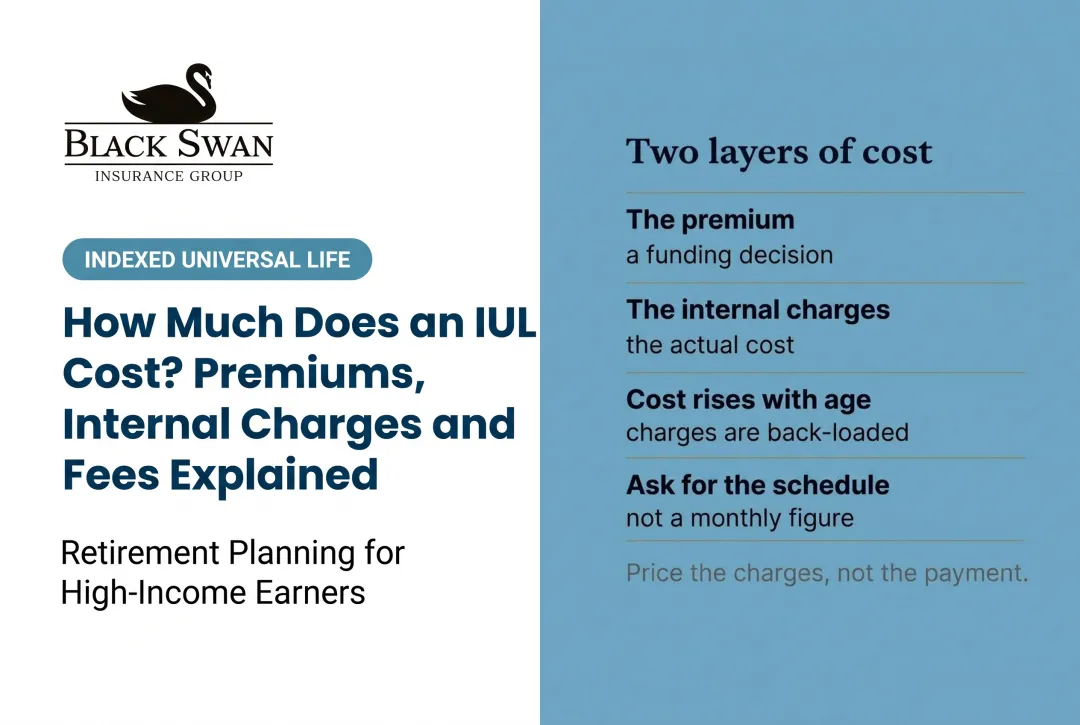
The short answer: The conversation is free. The contract is not. A consultation, a rough quote and a full carrier illustration normally cost nothing, because the agent is paid out of the premium if you buy. An in-force policy carries premiums, cost of insurance that rises with age, premium loads, administrative charges, rider costs, surrender charges and loan interest. Price the contract, not the meeting.
Key Takeaways
- A free quote or consultation is not the same as a funded, in-force policy with ongoing insurance charges
- Required premiums vary by age, health, coverage amount, policy design and the insurer's underwriting rules
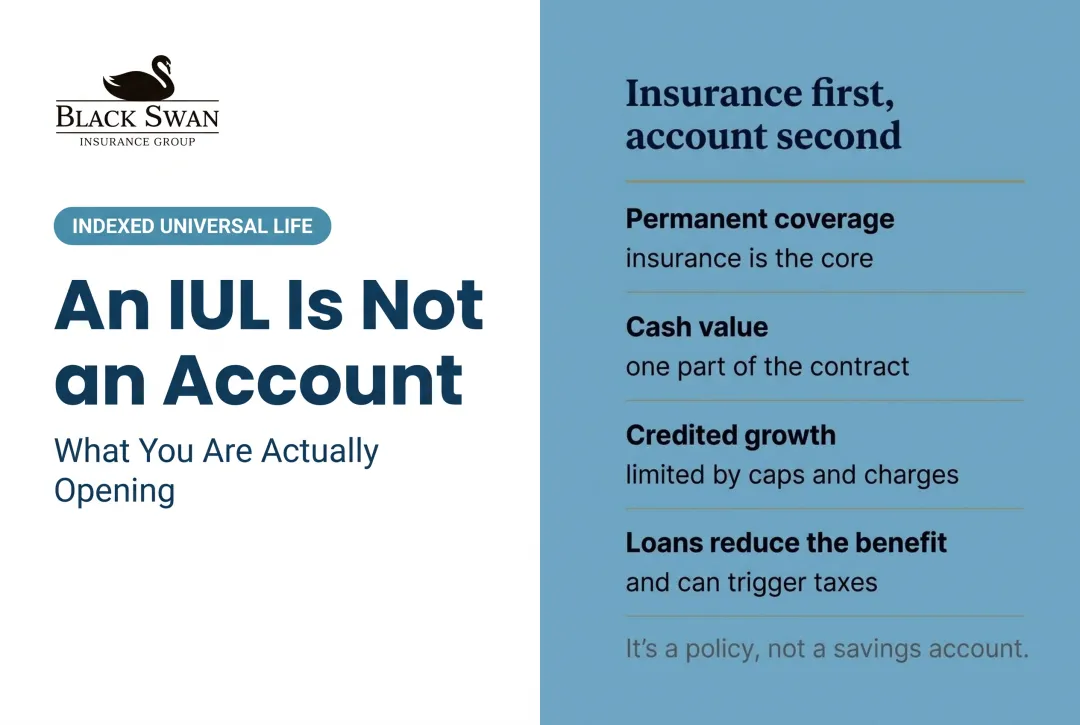
- Treat an IUL as life insurance with a cash-value feature, not as a market investment account
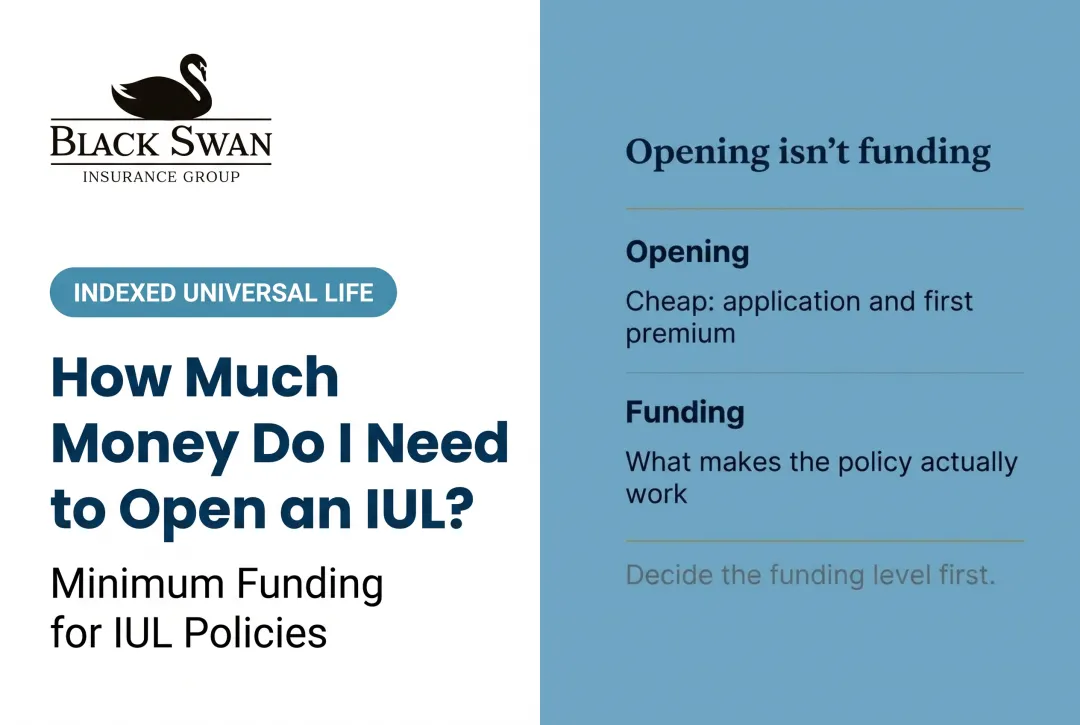
- The minimum premium that keeps a policy alive is not the funding level that makes it work
- Illustrations are projections — review charges, caps, participation rates and loan terms before signing anything
What "Free" Actually Refers To
Four different things get bundled under that word, and only three of them are real.
- Educational consultation. A call or meeting explaining how IUL works. Normally no cost.
- Preliminary quote. A rough premium estimate based on age, health class and desired coverage. Usually free.
- Policy illustration. A detailed, carrier-generated projection of premiums, charges and cash value over time. Typically provided at no charge once you are seriously evaluating.
- An active, funded policy. This is where free ends permanently.
"No Money Down" Deserves Scrutiny
Agents rarely charge a consultation fee. That does not mean nobody is paid. Commission is built into the insurance transaction, and a large share of first-year premium on a poorly designed policy goes to distribution. Ask directly how your agent and the carrier are compensated. A professional will answer without flinching.
Submitting an application, or even completing underwriting, does not guarantee approval. You remain subject to medical underwriting results, required ongoing premium payments, and policy issue and administrative charges.
Four questions worth asking before you proceed: Is the consultation or illustration genuinely free, with no obligation? Are there application fees, medical exam costs or policy issue charges? What premium is required to keep this specific policy in force? Which numbers in the illustration are guaranteed, and which can change?
The NAIC's Life Insurance Illustrations Model Regulation requires applicants to sign an acknowledgment that nonguaranteed illustrated values can move up or down. Even the free illustration arrives with a built-in warning attached.
An illustration is a model, not a guarantee.

What an Issued Policy Actually Costs
Once a contract is in force, several cost categories engage. None of them appear on a marketing page. All of them sit in the contract and the illustration.
- Premium payments — your contribution, part of which funds the death benefit
- Cost of insurance — the charge for the protection itself, which rises with age
- Administrative charges — flat or per-unit fees for maintaining the policy
- Premium loads — deductions taken off the top before money reaches cash value
- Rider charges — costs for optional benefits such as living benefits or waiver of premium
- Surrender charges — penalties for cancelling or heavily withdrawing early
- Loan interest — charged on any policy loan against cash value
A premium is not a deposit into savings. Part of every payment covers the death benefit and these expenses, which is why early cash value looks modest on any honest illustration.
What Moves Your Number
Your required premium depends on age and health classification at issue, tobacco use, coverage amount, policy design including death-benefit option and riders, and the funding schedule you choose.
There is a real difference between a minimum premium — just enough to stop the policy lapsing — and a target funding level designed to build cash value. More funding generally helps performance, but it has to pass an affordability test and a tax test.
Overfunding Has Its Own Cost
Fund too aggressively in the early years and the contract can fail the IRS seven-pay test under IRC Section 7702A and become a Modified Endowment Contract. Under IRS Revenue Procedure 2001-42, a contract fails that test if cumulative premiums during the first seven contract years exceed a calculated limit.
Once a policy is a MEC, loans and withdrawals are taxed gain-first and distributions before age 59½ can add a 10% tax. Have the funding level modelled before you write the first cheque.
Skip or reduce premiums and the insurer deducts charges straight from cash value. Repeat that and you weaken performance, shrink the death benefit, or trigger a lapse.
Zero is your hero in a down year — but the floor applies to the credit, not to the charges.
A 0% indexed floor protects credited interest in a down market. It does not make cash value immune to decline, because charges come out regardless of what the index did.
The Ultimate IUL Blueprint
Before the first premium, the Blueprint covers what the design has to survive: funding levels, caps and charges, the MEC line, loan timing, and exactly what to demand from an illustration.
How Application and Funding Actually Work
This is not a one-click process. It moves through five stages.
- Needs assessment. Protection need, beneficiaries, retirement goals, liquidity, existing 401(k) or IRA contributions, emergency reserves, and a premium budget you can sustain long term — not just this year.
- Compare insurers and designs. Never shop on projected cash value alone. Review carrier financial strength, guaranteed values, crediting methods, caps, participation rates, spreads, loan provisions, fees, riders and surrender schedules.
- Application and underwriting. Personal and financial information, health history, beneficiary details. A medical exam is common but not universal; requirements vary by carrier.
- Read the illustration properly. Compare guaranteed and non-guaranteed columns side by side, locate the break-even point, check how the death benefit changes, then stress-test lower-crediting and reduced-funding scenarios.
- Issue and initial funding. Review the final contract against what you were quoted, confirm your state's free-look period, and set up a payment method you can genuinely maintain.

The Free-Look Period Is a Safety Net, Not Free Coverage
Most states give you a window to cancel for a full refund after issue. New York's Department of Financial Services notes free-look periods ranging from 10 to 30 days, with 30 days common for mail-ordered policies. That protects you from a bad fit. It is not a free trial of life insurance.
Black Swan Insurance Group runs needs assessment, policy comparison and sign-up, then annual reviews once a policy is active. Not every applicant is approved, and coverage is never free. What you get is someone reading the fine print with you rather than emailing an illustration and disappearing.
This is not set-it-and-forget-it. It is design-it, fund-it, review-it.
What the Critics Get Right
The fairest criticism here is that "free consultation" is a sales funnel, not a service.
The meeting costs nothing because the economics are recovered from the premium of whoever buys. That is a genuine conflict, and pretending otherwise insults the reader. Critics are also right that early cash value is frequently disappointing relative to what the prospect remembers being shown, that cost of insurance climbs with age, and that a policy sold rather than designed tends to be funded at a level that flatters the illustration instead of the owner.
The honest response is not to refuse the free meeting. It is to arrive with the four questions above, demand the guaranteed column, and compare more than one carrier.
A great IUL is engineered. A bad IUL is sold.
Who This Fits
Stronger Fit
- A genuine, ongoing need for permanent coverage, not a 10- or 20-year term need
- Stable surplus cash flow beyond retirement accounts and emergency savings
- A long horizon, generally 15 years or more
- Willingness to monitor funding and adjust over time
- A reason to diversify where future retirement income comes from
Weaker Fit
Not everyone should buy this. Be cautious if you hold limited emergency savings or uncertain income, have liquidity needs in the next three to five years, find the proposed premium uncomfortable, have no real permanent coverage need, or are leaning on optimistic non-guaranteed numbers to make the plan work.
| Option | Core purpose | Key distinction from IUL |
|---|---|---|
| Term life | Temporary death-benefit protection | No cash value, lower cost, fixed term |
| Whole life | Permanent protection with guaranteed cash value | Fixed crediting, not index-linked |
| 401(k) | Employer retirement savings | Not insurance; no death benefit |
| Roth IRA | Tax-free retirement growth | Contribution limits, no insurance component |
For high earners, business owners and late starters, the decision reduces to six tests: insurability at a reasonable rate class, years remaining for the design to mature, funding capacity without straining other goals, a real death-benefit gap, concentration risk if your wealth sits inside a business, and whether competing obligations should come first.
Risks to Understand Before You Apply
Indexed crediting is a formula, not ownership. Returns are linked to an external index but limited by caps, participation rates, spreads or bonus features set by the insurer. You never own shares of the index, and the formula can be reset at renewal.

- Illustrated rates are projections. Caps, participation rates and internal charges can all shift across decades, which changes the outcome.
- Loan interest accrues on the outstanding balance, and unpaid loans reduce both cash value and the death benefit.
- A large loan balance can contribute to lapse, and lapse or surrender with debt outstanding can create taxable income with no cash received.
- Underfunding is the leading cause of failure, because charges continue whether or not you pay.
- Annual reviews matter more than people expect. Caps change, participation rates adjust, loan balances grow unattended. Comparing actual values against the original illustration once a year catches all three early.
Find Out Where You Actually Stand
This starts with the Tax-Free Wealth Blueprint Fit Review. If you earn $150K+ and you are trying to work out what this really costs, we price the contract rather than the meeting — the protection need first, then the funding modelled against the MEC limit, stress-tested through lower-crediting and zero-credit years, with charges, surrender schedule and loan assumptions shown in plain numbers across more than one carrier. If a term policy and a Roth strategy serve you better, we will say so. If IUL does not fit, we will tell you that too.
Frequently Asked Questions
Can I open an IUL without paying premiums?
No. An inquiry, consultation or preliminary illustration can be free, but an issued policy requires premiums and ongoing charges. Skip required funding and the insurer deducts from cash value or lets the policy lapse.
How much money do I need to start one?
There is no universal number. Required premiums depend on age, health, coverage amount, policy design and the insurer's rules — and the minimum that keeps a policy in force differs sharply from what produces meaningful cash value.
Are IUL consultations and quotes really free?
Usually yes for the initial conversation and preliminary quote. Confirm whether fees, obligations or commissions apply to any further planning work, and ask how the professional is compensated.
What costs should I expect?
Premiums, cost of insurance, administrative expenses, premium loads, rider charges, possible surrender charges, and loan interest if you borrow against cash value. Your specific numbers live in the illustration and the contract.
Can I lose money in an IUL policy?
Yes. Index crediting may include a floor, but policy charges, insufficient premiums, withdrawals, loans and lapse can all reduce cash value. That is a different risk profile from investing directly in the underlying index, not an absence of risk.
What is the best IUL to buy?
There is no single best contract. Compare insurer financial strength, guarantees, charges, crediting methods and loan provisions against your own protection and funding needs.
Sources
- NAIC — Life Insurance Illustrations Model Regulation
- IRS — Revenue Procedure 2001-42
- New York Department of Financial Services — Life insurance consumer guidance
Disclosure: This article is educational and is not personal tax, legal or investment advice. Indexed universal life is life insurance first. Illustrated values are not guarantees; actual results depend on policy design, carrier, crediting options, caps, participation rates, expenses, funding and ongoing management. Free-look periods, product availability and underwriting requirements vary by carrier and state. This strategy is not appropriate for everyone. Policy loans and withdrawals reduce cash value and the death benefit, and can create tax consequences if the policy lapses or becomes a modified endowment contract. Consult your own tax, legal and financial professionals for advice specific to your situation. Any potential tax-advantaged access depends on the policy being properly structured, funded and managed.
And remember, it's not what you earn, it's what you keep… enjoy the ride.