By Robert Balgac, Founder, Black Swan Insurance Group | October 9, 2026
"Properly structured" is doing enormous work in this phrase, and almost nobody defines it. The pitch — pay as much as possible into an indexed universal life policy and watch the cash value climb — skips the engineering that decides whether the thing survives.
Structuring a max-funded IUL means designing and funding the contract to prioritise long-term cash value accumulation while preserving its legal status as life insurance. The tax treatment people are buying only exists while the contract stays inside IRS modified endowment contract and guideline premium limits. Cross either line and the design you paid for is gone.
The short answer: There is no universal maximum. The ceiling depends on your age, underwriting class, death benefit, policy design and prior premium history, and two people with identical incomes can have entirely different limits. Proper structure means sizing the death benefit to the real protection need, solving for premium just under the seven-pay ceiling, understanding which crediting terms are guaranteed and which are not, and reviewing the whole thing annually.
Written for the $150K+ professional, executive or business owner who has captured the match, maxed the 401(k) and hit the Roth phase-outs — and who is now being shown a design nobody has explained.
Key Takeaways
- This is a design and funding approach, not a separate product and not a guaranteed investment
- Proper structure balances death benefit sizing, premium limits and compliance with IRC Sections 7702 and 7702A
- Caps, floors and participation rates affect crediting, but policy charges apply regardless of index performance
- It requires surplus cash flow, a long horizon and a genuine permanent insurance need — all three
- Illustrations must be stress-tested against unfavourable assumptions before any capital is committed
What "Properly Structured" Actually Means
A properly structured max-funded IUL is built to accept high planned premiums against the lowest death benefit the contract allows, pushing more premium into cash value without losing life-insurance tax treatment or triggering MEC status.
Conventional funding keeps premiums near the minimum needed to hold permanent coverage in force, with the death benefit as the priority. Max funding runs premiums near the top of the allowed range so more dollars build cash value, while the contract still qualifies as permanent life insurance.
The Federal Tax Framework
Two code sections govern the balance.
Section 7702 requires the contract to pass either the cash value accumulation test or the guideline premium test plus corridor rule to count as life insurance for federal tax purposes.
Section 7702A applies the seven-pay test, capping premiums in the first seven years. Pay more than seven level annual payments would require and the policy becomes a Modified Endowment Contract.
Exceeding the seven-pay limit at any point in those first seven years triggers MEC status under Section 7702A, and it does not reverse. Once a policy is a MEC, it is a MEC for life.
Max funding done correctly means paying as close to that ceiling as your goals allow without crossing it. It is not putting in every available dollar before the limits have been modelled.
The Structuring Sequence
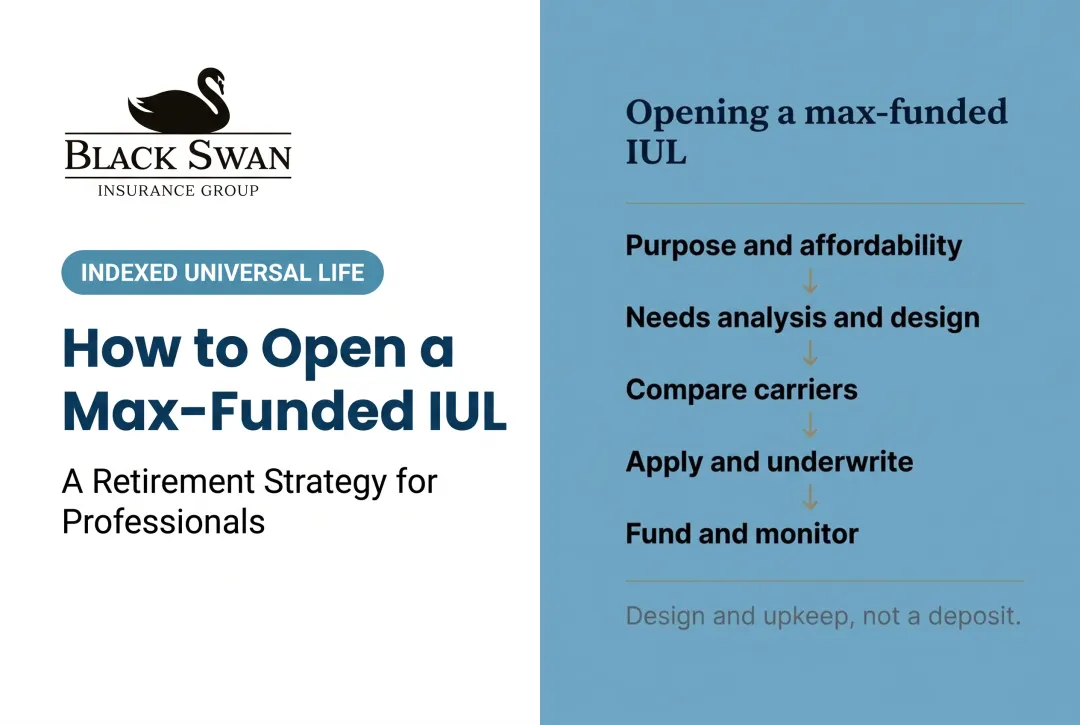
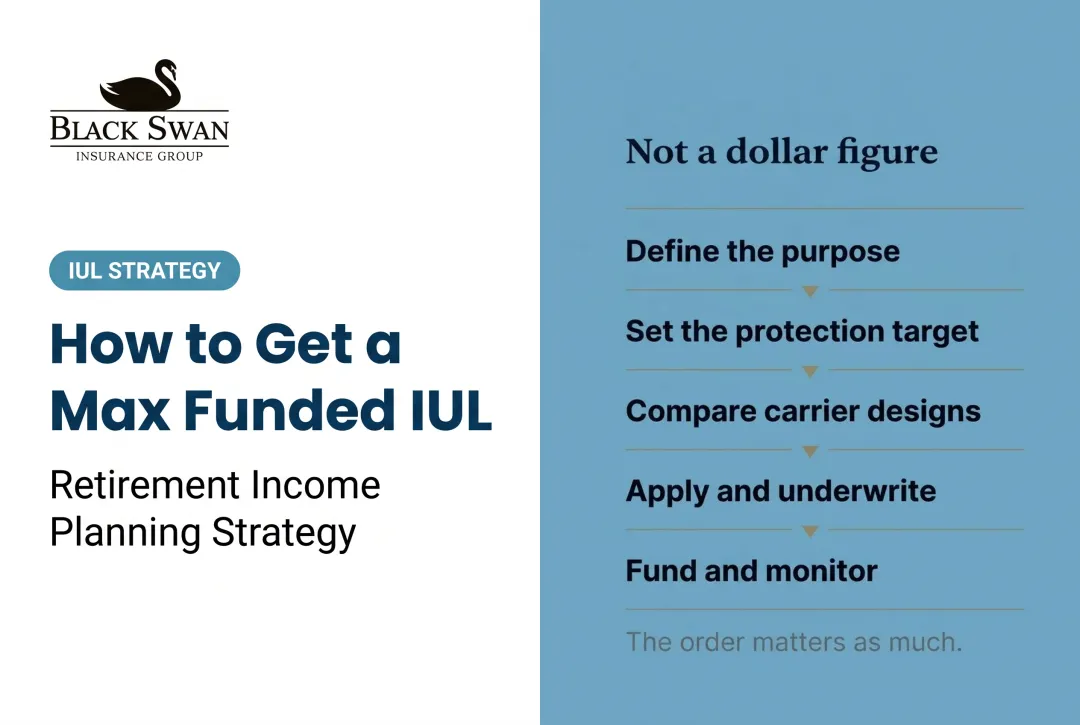
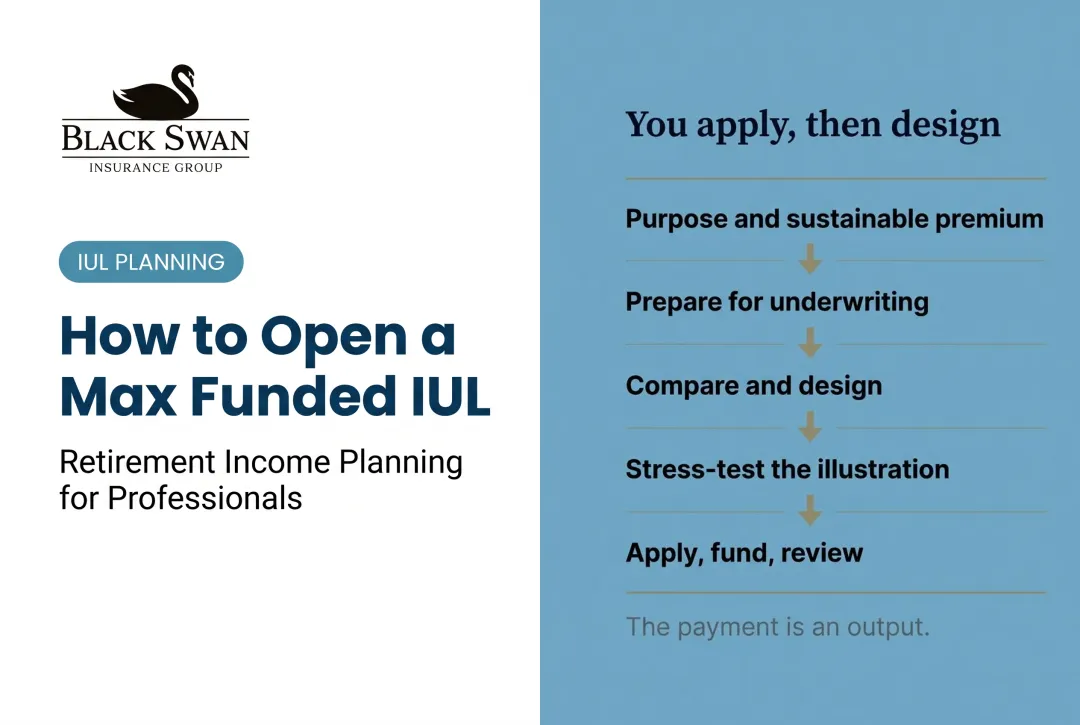
Define goals, size the death benefit, solve for premium, stress-test, review annually. Skipping a step is where almost every problem starts.

Step 1: Objectives and Capacity
Establish your actual permanent insurance need and desired death benefit; retirement income goals and legacy objectives; existing coverage, cash reserves and income stability; and the surplus cash flow you can commit without strain.
Before allocating meaningful dollars here, confirm emergency reserves, any employer retirement-plan match, appropriate term coverage and debt obligations are all handled. This supplements a plan; it does not replace the fundamentals.
Step 2: Death Benefit and Funding Relationship
Death benefit amount, death benefit option, underwriting class and age all determine how much premium the contract can absorb and how efficiently that premium converts to cash value.
Reducing unnecessary death benefit improves the ratio of premium reaching cash value. The design still has to clear your actual protection need, the contractual and tax requirements including MEC limits, and the realities of your underwriting class and issue age.
Compare multiple carrier designs side by side and insist on seeing guaranteed and non-guaranteed values separately. A single attractive illustration tells you almost nothing.
A great IUL is engineered. A bad IUL is sold.
Step 3: Crediting and Loan Features
The cap limits the maximum credited rate. The participation rate determines how much index movement applies. The spread is deducted from index gain before crediting. The floor sets the guaranteed minimum, often 0%.
One detail gets missed constantly: the floor applies to interest crediting, not to total cash value. Per Midland National's index selections disclosure, the policy is not an investment in the index or the stock market; it is a contractual formula.
Zero is your hero in a down year — but the floor applies to the credit, not to the charges.
Loan provisions deserve equal scrutiny: fixed against indexed or participating loans, the loan interest rate, how loan balances are treated for crediting purposes, and whether the contract includes overloan protection.
Step 4: Validate Before Implementation
Review premium loads, cost of insurance, administrative charges and surrender schedules; guaranteed values alongside non-guaranteed assumptions; carrier financial strength and claims-paying history; and what happens if the insurer reduces caps or participation rates.
Then model the bad scenarios — missed premiums, lower crediting years, early surrender, a loan left outstanding too long. If the policy only works under the best-case illustration, it is not properly structured. That is the whole test.
An illustration is a model, not a guarantee.
Stress-testing only helps if someone revisits the design after issue. Black Swan builds that comparison and annual-review discipline into the process.
The Ultimate IUL Blueprint
Before the design is locked, the Blueprint covers what it has to survive: funding levels, caps and charges, the MEC line, loan timing, and exactly what to demand from an illustration.
The Variables That Decide Whether It Holds
Premium capacity and funding consistency. Reliable surplus cash flow matters more than a high starting premium. Missing planned payments shrinks cash value growth and can change the contract's tax treatment entirely.
Death benefit and design. The death benefit option, net amount at risk and underwriting outcome shape insurance costs, premium limits and how much MEC room you have before the seven-pay ceiling.
Contract economics. Premium loads, cost of insurance, administrative fees, surrender charges and rider costs all reduce cash value regardless of index performance.
Crediting assumptions. Caps, participation rates, spreads and floors vary by carrier and strategy. Some terms are guaranteed; most are not. Know which is which before funding.
Tax and compliance. Ongoing monitoring of Section 7702 qualification and seven-pay testing separates tax-advantaged access from a taxable event.
Liquidity and time horizon. Early cash value is frequently lower than cumulative premiums paid, and surrender charges can restrict access for a decade or more.
Loan management. Loans accrue interest and reduce both available cash value and the death benefit. A contract carrying a large, unmanaged loan runs materially higher lapse risk.
The loan is not the problem. The unmanaged loan is the problem.
The Loan Tax Trap, With Numbers
Tax researcher Michael Kitces walks through a policy with $105,000 of value, $60,000 of basis and a $30,000 outstanding loan. Surrendering nets $75,000 in cash once the loan is repaid — and still produces a $45,000 taxable gain.
The gain is measured against value before loan repayment, not after. As Kitces explains, a heavily loaned policy can generate a real tax bill when little or no cash lands in your pocket. That is the scenario a properly structured design is supposed to prevent, and the one an unmonitored policy walks straight into.

What the Critics Get Right
The persistent myths around this strategy are not accidents. They are what the pitch leaves behind.
"A 0% floor means I can never lose money." The floor protects the crediting rate, not total cash value. Insurance costs, administrative charges and surrender fees are deducted regardless.
"It's basically investing in the S&P 500." It is not. Interest is credited by a capped, formula-based calculation tied to index movement. You never own the securities, and gains are limited by caps or participation rates the carrier can adjust.
"Tax-free access is automatic." It is conditional — on the policy remaining non-MEC, on adequate basis, on responsible loan management, and on the contract staying in force with no lapse and no surrender while debt is outstanding.
Critics are right that these beliefs are widespread, right that illustrations have been used to encourage them, and right that the buyer carries the consequence while the seller has usually moved on. Watch for the red flags in any proposal: a death benefit sized without explanation; only one set of assumptions; no MEC monitoring plan; income projections assuming best-case crediting every single year; and no discussion of alternatives.
Who This Fits
Stronger Fit
- A genuine, ongoing need for permanent life insurance alongside the accumulation goal
- Stable surplus cash flow and the ability to fund consistently for decades
- A long time horizon and adequate liquidity elsewhere
- Willingness to review the design annually rather than file it away
This is not set-it-and-forget-it. It is design-it, fund-it, review-it.
Weaker Fit
Not everyone should buy this. It is probably not a fit if you have no genuine permanent insurance need, cannot commit to consistent long-term funding, need access to the money in the near term, have unstable or unpredictable income, or have not yet maxed lower-cost tax-advantaged accounts such as a 401(k) or Roth IRA.
If your priority is uncapped market growth, simple low-cost index investing or guaranteed cash value, capped crediting and contract charges will not deliver it. Term insurance, whole life, qualified retirement plans, taxable brokerage accounts, annuities and plain cash reserves each solve a different problem, often more directly and at lower cost.

Coordinate with a licensed insurance professional, a tax adviser and, where relevant, an attorney before committing substantial capital.
Risks to Understand Before You Structure One
- MEC status is permanent. Crossing the seven-pay line at any point in the first seven years cannot be undone, and it changes the taxation of every loan and withdrawal afterwards.
- Caps and participation rates are mostly non-guaranteed and can be reset after issue within contract minimums.
- Cost of insurance rises with age. A design that balances at 45 can strain at 70 if funding never changed.
- Early cash value is often below cumulative premiums, and surrender charges can restrict access for a decade or more.
- A heavily loaned policy can create a taxable gain measured before loan repayment, leaving tax due on cash you never received.
- Minimising the death benefit for cash-value efficiency reduces the protection that justified the contract in the first place.
Find Out Where You Actually Stand
This starts with the Tax-Free Wealth Blueprint Fit Review. If you earn $150K+ and want to know whether a design is genuinely structured or merely sold, we establish the protection need, confirm the MEC limit for your specific contract, put guaranteed and non-guaranteed values side by side, run an adverse stress test through lower-crediting and zero-credit years, and compare carrier designs with charges and loan assumptions in plain numbers. If term plus maxed retirement accounts serves you better, we will say so. If IUL does not fit, we will tell you that too.
Frequently Asked Questions
How should an IUL be structured?
Start with the actual protection need and financial capacity, then coordinate death benefit sizing, premium funding, policy costs, crediting features, MEC limits and liquidity. Ongoing monitoring matters as much as the initial design.
What does "max funded" mean?
Funding the policy with substantial premiums relative to the death benefit while staying inside the applicable seven-pay limit. The exact maximum varies by design, age and insured.
What happens if the policy becomes a MEC?
MEC status changes how loans and withdrawals are taxed, generally shifting to income-first treatment with a potential additional 10% tax before age 59½. Confirm specifics with a tax professional before funding near the limit.
Can you lose money in a max-funded IUL?
Yes. A floor prevents negative index crediting, but policy charges, surrender costs, loan interest and insufficient funding can all reduce cash value or cause a lapse.
Who is a good candidate?
Someone with a genuine permanent insurance need, stable surplus cash flow, a long horizon, adequate liquidity elsewhere and the willingness to review annually. Fit depends on the full picture, not income alone.
How do policy loans affect the design?
They accrue interest and reduce both cash value and the death benefit. Unmanaged, they raise lapse risk and can create taxable income if the policy lapses or is surrendered with debt outstanding.
Sources
- Cornell Law School — 26 U.S. Code § 7702A
- Midland National — Index Selections Guide
- Kitces — Life insurance loan taxation rules at death or lapse
Disclosure: This article is educational and is not personal tax, legal or investment advice. Indexed universal life is life insurance first. Illustrated values are not guarantees; actual results depend on policy design, carrier, crediting options, caps, participation rates, expenses, funding and ongoing management. Seven-pay and guideline premium limits are contract-specific and must be confirmed with the issuing carrier. This strategy is not appropriate for everyone. Policy loans and withdrawals reduce cash value and the death benefit, and can create tax consequences if the policy lapses or becomes a modified endowment contract. Consult your own tax, legal and financial professionals for advice specific to your situation.
And remember, it's not what you earn, it's what you keep… enjoy the ride.