By Robert Balgac, Founder, Black Swan Insurance Group | October 7, 2026
"Generational wealth" is a phrase that does a lot of selling. For a $150K+ earner who has maxed the 401(k), passed the Roth phase-out and is now looking at what to leave behind, indexed universal life shows up in that conversation almost automatically.
Here is the part the pitch skips. IUL is genuinely complex — policy costs, underwriting, crediting formulas, funding rules, loan mechanics and tax treatment all interact. Get one wrong and a policy meant to protect your family for forty years underperforms or lapses, usually long after the person who sold it has moved on.
The short answer: IUL can support a generational plan through a permanent death benefit, estate liquidity and lifetime access to cash value. It does that only when the ownership is right, the funding is sustainable, and someone reviews it annually. The illustration you were shown is a projection, not a promise, and an income-tax-free death benefit does not automatically stay out of your taxable estate.
Key Takeaways
- IUL is permanent life insurance first — cash value growth is the secondary benefit
- A suitable policy needs stable income, sustainable funding, a real protection need and runway
- Growth hinges on caps, participation rates, floors and ongoing charges
- Loans and withdrawals give living access but shrink the death benefit and raise lapse risk
- Compare it against the 401(k), Roth, brokerage investing and other insurance first
When It Actually Makes Sense
Three conditions have to line up: you need permanent coverage, you have a genuine long-term legacy or family-protection goal, and you can fund it consistently without touching emergency reserves or core retirement contributions.
Good candidates are high earners seeking tax diversification alongside existing accounts, business owners wanting assets held outside a concentrated and illiquid company, and affluent families planning estate liquidity and an orderly transfer.
Where It Gets Misused
Watch for treating it as short-term savings for a house deposit; funding it instead of capturing an available employer match; chasing the highest illustrated return rather than reading guaranteed values; and committing to a premium that strains the budget in a slow business year.
The NAIC warns that cash value in permanent policies starts low and builds over time — which makes IUL a poor home for money you will need in the next few years.
Late Starters Need Different Maths
At 45 to 55 and just hitting peak earnings, the calculation shifts: fewer accumulation years before you want access, and insurance costs rising with age. Before applying, work through your actual insurability and health history, how many funding years remain, the guaranteed (not illustrated) cash surrender value at your intended access age, and whether a 401(k) catch-up or a brokerage account is simply the better instrument.
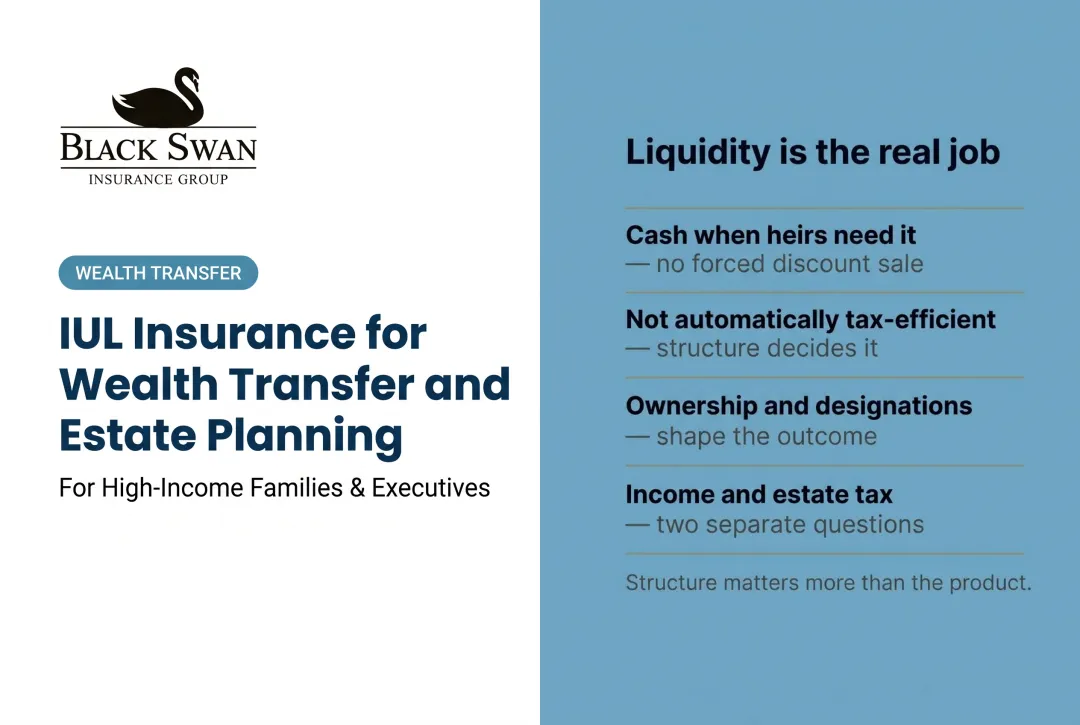
Legacy goals also raise an ownership question most people get wrong. Under federal regulations governing life insurance proceeds, proceeds can be pulled into your estate if you retain incidents of ownership — the power to change beneficiaries, or to borrow against the policy. That decision belongs with your estate attorney, not your insurance agent.

What to Have Ready
Before requesting an illustration, get clear on four things.
Objectives. Define the death benefit, name beneficiaries, and state the purpose — inheritance, estate liquidity, business continuity, education. Vague goals produce badly designed policies.
Sustainable cash flow. Document income stability, reserves, debt and current retirement contributions. The premium you commit to must survive a bad year, not just a good one.
Personal details. Underwriters want age, health history, tobacco use, obligations, existing coverage, business interests and relevant estate documents.
Professional coordination. A licensed insurance professional to model multiple funding scenarios, your CPA for tax treatment, an estate attorney where trusts or succession are involved, and your investment adviser to confirm the policy complements rather than duplicates what you hold. Insurance guidance is not tax or legal advice, and anyone implying otherwise should worry you.
The Ultimate IUL Blueprint
Before funding anything, the Blueprint covers what the design has to survive: funding levels, caps and charges, the MEC line, loan timing, and what to demand from an illustration.
The Sequence

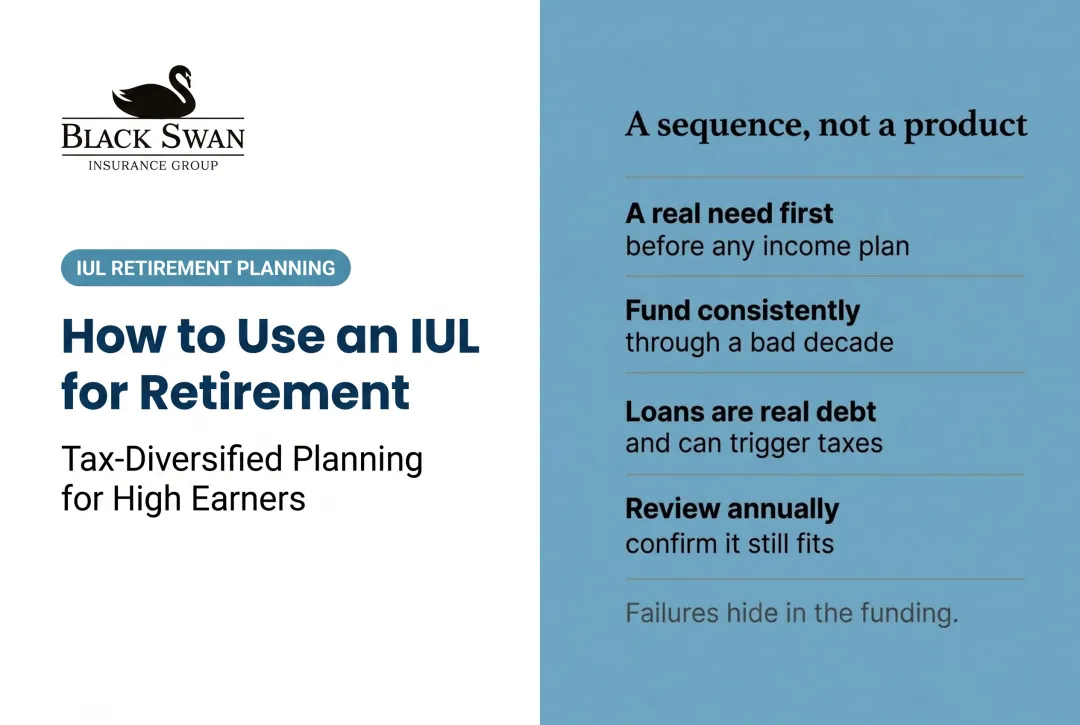
Define the objective. Start with the family's actual need for permanent coverage. Keep the death benefit decision separate from the cash value decision — choosing a face amount purely to maximise projected accumulation skews cost of insurance and crowds out flexibility. Beneficiary designations, ownership, successor ownership and any trust all affect how cleanly wealth transfers. Loop in estate counsel; do not design the transfer yourself.
Design and compare. Most long-term performance is decided here: death benefit option (level or increasing), premium pattern, riders and their cost, how cost of insurance changes with age, and the surrender schedule.
| Term | What it means |
|---|---|
| Cap | Maximum indexed interest creditable in a period |
| Participation rate | Share of index gain applied to crediting |
| Floor | Minimum index-based credit, often 0% |
| Spread | Portion of index gain subtracted before crediting |
These vary by carrier and can change over time. None of them means your cash value is invested in the market — the index is a reference point for a formula, nothing more.
Always request guaranteed and current illustrated values, modelled across several funding scenarios rather than one optimistic projection. A 0% floor stops negative crediting; it does not stop monthly charges eating cash value, and a policy can lapse with the floor working perfectly.
Zero is your hero in a down year — but the floor applies to the credit, not to the charges.
Fund it responsibly. Three levels matter: minimum funding keeps the policy active but builds little; planned funding is your intended accumulation schedule; maximum funding is capped by MEC rules. Under IRC §7702A, premium above the seven-pay limit in the first seven contract years makes the contract a MEC, shifting loans and withdrawals to income-first treatment with a potential 10% penalty on early access. There is no universal dollar limit — get a policy-specific calculation.
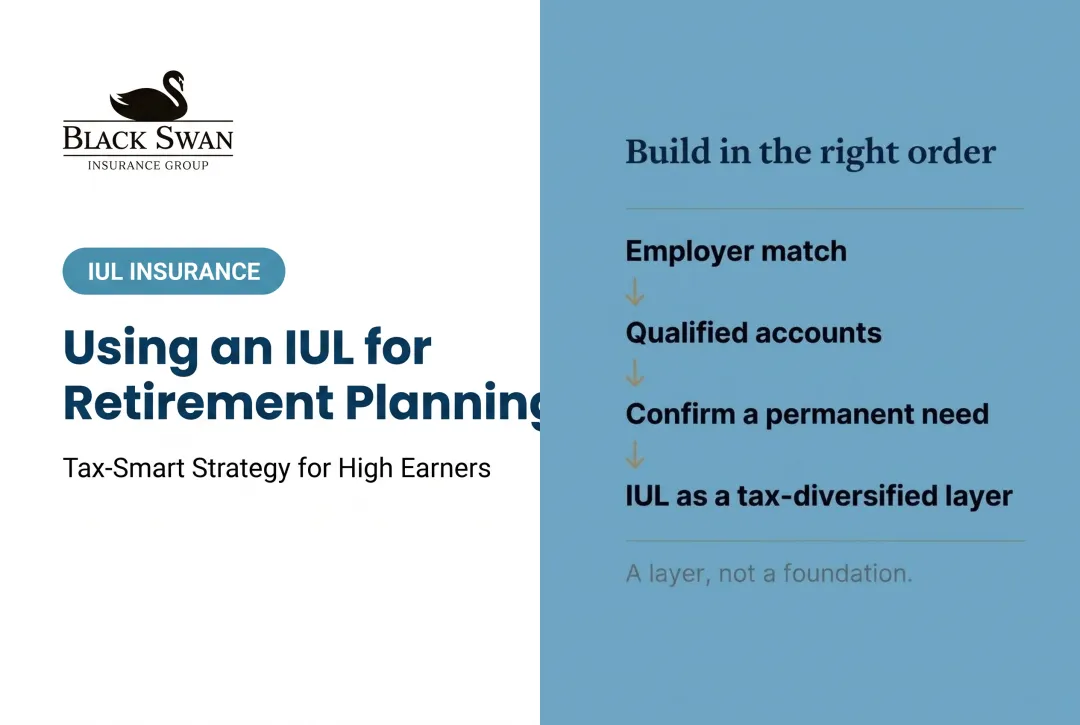
Coordinate the premium against emergency reserves, the employer match (never skip free money to fund a policy), high-interest debt, existing retirement contributions and business reinvestment. Max-funded does not mean best-designed — a policy pushed to the MEC line loses flexibility the year your income dips.
Access carefully. Withdrawals reduce policy value directly and need no repayment but can cut the death benefit. Loans borrow against available value, accrue interest, and reduce what heirs receive. Favourable tax treatment generally depends on the contract staying non-MEC and in force until death. Lapse or surrender with a loan outstanding converts previously untaxed gain into taxable income — a large bill in the year you can least afford it.
The loan is not the problem. The unmanaged loan is the problem.
Monitor it. Every year: premiums against what the policy requires, cash value against the original illustration, changes to caps or participation rates, loan balances, beneficiary designations, and the gap between current and guaranteed values. Warning signs are declining cash value, rising insurance costs, a missed premium, a lowered crediting assumption, or a life change that shifts the original need.
What the Critics Get Right
The honest criticism is that "building generational wealth with life insurance" inverts the product. You do not build wealth with an insurance contract — you build it with income, businesses, equities and time. Insurance transfers it efficiently and protects it from a premature death.
Positioned as an accumulation vehicle against a low-cost index fund, IUL loses on returns and it is not close: capped upside, no dividends in most crediting calculations, and charges that compound against you. Anyone showing you an illustration that appears to beat the market is showing you assumptions, not outcomes.
Positioned as what it is — protection with a differently-taxed bucket attached, for someone who already has the other buckets — it holds up. The difference is framing, and the framing is usually where the mis-selling starts.
Where It Fits in the Wider Plan

Immediate death-benefit protection, liquidity for estate obligations, supplemental access for you, and a structured asset the family can plan around. It works as one piece of a strategy that also includes the 401(k), Roth accounts, taxable brokerage, real estate and succession planning.
Document now, not later: who owns the policy, who the beneficiaries are and how proceeds should be used, and how your family manages the policy's responsibilities after you are gone.
Before locking a design, verify carrier financial strength, guaranteed against non-guaranteed values, all fees including surrender charges, loan provisions and rates, whether the carrier has changed index strategies before, and the adviser's licensing and compensation.
Stronger Fit
- $150K+ income with stable surplus cash flow after reserves and maxed retirement accounts
- A genuine need for permanent coverage
- A long horizon and favourable insurability
- Commitment to reviewing the policy annually
Weaker Fit
It is probably the wrong tool if your horizon is short, cash flow is unstable, you have no genuine protection need, health makes underwriting unfavourable, you carry high-priority debt, your retirement accounts are underfunded, or you simply prefer simpler and more liquid investments. All of those are legitimate reasons to walk away.
Risks to Understand Before You Fund
- Underfunding is the leading failure mode, and it surfaces decades later.
- Caps and participation rates can be lowered, subject to contract minimums.
- Cost of insurance rises with age and can overtake crediting in a thin policy.
- MEC status is generally permanent and removes the access advantage.
- Retained incidents of ownership can pull proceeds into your taxable estate.
- Lapse with a loan outstanding creates taxable income with no cash received.
Find Out Where You Actually Stand
This starts with the Tax-Free Wealth Blueprint Fit Review. If you earn $150K+ and are weighing a policy as part of a legacy plan, we establish the protection need and the liquidity gap first, model the funding against the MEC limit, stress-test it through lower-crediting and zero-credit years and a two-year premium pause, and show the loan assumptions in plain numbers. Final tax, legal and investment decisions stay with your CPA, attorney and adviser. If IUL does not fit, we will tell you that too.
Frequently Asked Questions
Can IUL help build generational wealth?
It can help transfer it efficiently and protect it against a premature death. Designed and funded correctly it combines a death benefit with cash value and lifetime access, and results depend on policy design, funding discipline, charges and ongoing management — not a projected number.
How does an IUL pass wealth to beneficiaries?
The death benefit transfers to named beneficiaries, typically free of federal income tax. Coordinate ownership and beneficiary designations with the broader estate plan to avoid unintended estate inclusion.
Can I use the cash value during my lifetime?
Yes, through withdrawals and loans, though loans accrue interest and reduce the death benefit. Verify current tax rules before taking money out — lapsing with a loan outstanding can trigger taxable income.
Is IUL better than a 401(k) or Roth IRA?
They do different jobs. A 401(k) and Roth are retirement accounts; IUL is permanent insurance with an indexed-interest feature. Treat it as a complement, after the match and core contributions.
What are the risks of using IUL for wealth building?
Policy charges, crediting caps, surrender costs and lapse risk if premiums or loans are mismanaged. Illustrations change, and an underfunded or lapsed policy can produce an unexpected tax bill.
Who is a good candidate?
Someone with a genuine permanent coverage need, stable surplus cash flow, a long horizon, favourable insurability, and the willingness to review the policy regularly rather than file it away.
Sources
- eCFR — Treasury Regulation §20.2042-1, proceeds of life insurance
- IRC §7702A guidance
- NAIC — Life Insurance
- NAIC — Life Insurance Illustrations
Disclosure: This article is educational and is not personal tax, legal or investment advice. Indexed universal life is life insurance first. Estate inclusion depends on ownership and retained rights under federal law and requires review by a licensed attorney and tax professional. Illustrated values are not guarantees; actual results depend on policy terms, crediting, costs and funding. Any potential tax-advantaged access depends on the policy being properly structured, funded and managed. Actual results depend on policy design, carrier, crediting options, caps, participation rates, expenses, funding and ongoing management. This strategy is not appropriate for everyone. Policy loans and withdrawals reduce cash value and the death benefit, and can create tax consequences if the policy lapses or becomes a modified endowment contract. Consult your own tax, legal and financial professionals for advice specific to your situation.
And remember, it's not what you earn, it's what you keep… enjoy the ride.