By Robert Balgac, Founder, Black Swan Insurance Group | October 7, 2026
Yes. You can put an Indexed Universal Life policy into a life insurance trust. That one-word answer hides three genuinely different outcomes, and the difference between them is measured in control you cannot get back.
A trust can own the policy outright. A trust can simply be named beneficiary while you keep ownership. Or you can transfer a policy you already own into an irrevocable trust after the fact — and start a three-year clock you may not survive. Each route changes who controls the contract, how it is taxed, and how much work lands on a trustee for the next thirty years.
The short answer: Naming a trust as beneficiary while you keep ownership changes nothing about your taxable estate — you still hold the rights, so the IRS still treats it as yours. Only an irrevocable structure with the trust as owner can exclude proceeds, and the price is permanent: no beneficiary changes, no loans, no surrender, ever. Transferring an existing policy carries a three-year lookback. And none of it fixes a policy that was badly designed in the first place.
This is life insurance first. Before any of the trust machinery is worth discussing, the policy has to work on its own merits — adequately funded, realistically illustrated, and genuinely needed. A trust wrapped around a failing contract is an expensive way to lose the same money.
Key Takeaways
- Trust ownership, trust-as-beneficiary and later transfer produce three different tax and control outcomes
- Naming a trust as beneficiary alone does not remove the policy from your taxable estate if you keep ownership rights
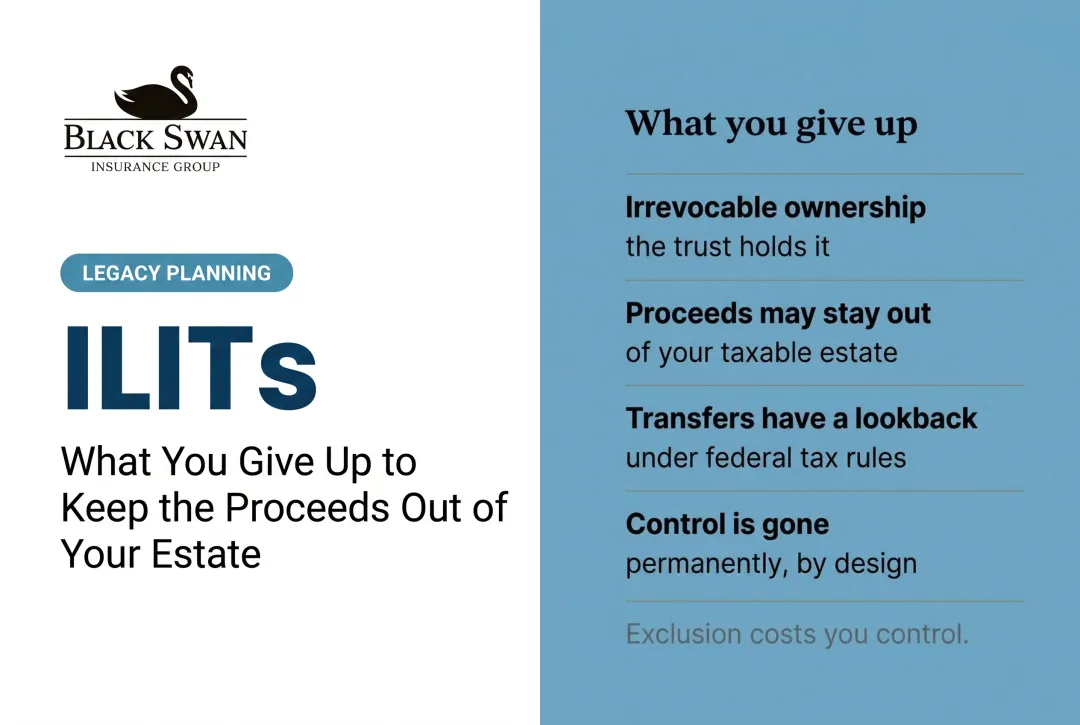
- An ILIT can exclude proceeds, but you permanently lose control over beneficiaries, loans and surrender
- Transferring an existing policy carries a three-year lookback under federal tax law
- A trust cannot rescue a poorly funded or unsuitable policy
What Each Piece Actually Is
An IUL is permanent life insurance. It pays a death benefit and builds cash value credited by reference to an external index such as the S&P 500.
The cash value is never invested in that index. Insurers constrain crediting with a participation rate and a cap rate, and typically apply a 0% floor so a negative index year does not produce negative credited interest.
That floor protects against index losses, not against internal charges. Pacific Life's own IUL disclosures state that monthly administrative fees, cost-of-insurance charges and loan interest can still erode cash value in a 0% index year.
Zero is your hero in a down year — but the floor applies to the credit, not to the charges.
A life insurance trust is a legal arrangement that owns a policy and keeps the death benefit outside the insured's taxable estate. Estate work overwhelmingly uses an irrevocable life insurance trust (ILIT).
Five roles matter: the grantor who creates and funds it, the trustee who manages it, the insured whose life is covered, the policy owner holding contractual rights, and the beneficiaries who ultimately receive distributions. Those are five distinct jobs and they are not always five distinct people — which is exactly where plans go wrong.
Three Arrangements, Three Outcomes
- The trust owns the policy and is the beneficiary.
- You own the policy, and a trust is named beneficiary.
- An existing, individually owned policy is transferred into an irrevocable trust later.
A revocable living trust and an ILIT handle these very differently. One preserves flexibility; the other removes it deliberately. Outcomes always depend on your documents, your state law and your circumstances, so none of this substitutes for your own attorney.

Ownership Versus Beneficiary — the Distinction That Costs People Money
Ownership controls the contract while you are alive: loans, withdrawals, surrender, beneficiary changes. Beneficiary designation only directs where the death benefit goes after you die. It says nothing about who runs the policy beforehand.
| Factor | Revocable trust ownership | ILIT ownership |
|---|---|---|
| Control | Grantor can amend or revoke at any time | Grantor permanently gives it up |
| Estate-tax exclusion | Generally does not remove proceeds from the taxable estate | Can exclude proceeds when properly structured |
| Flexibility | High | Low, by design |
| Administration | Lighter; grantor can self-manage | Requires an independent trustee |
| Typical use | Avoiding probate, managing incapacity | Estate-tax planning for larger estates |
A revocable trust keeps your options open, and that is precisely why it usually fails to shield proceeds from estate tax. Because you can revoke it, you are generally still treated as the owner.
An ILIT is the opposite trade. Once in place you typically cannot reclaim ownership, change beneficiaries, or borrow against the cash value yourself. You surrender control in exchange for exclusion.
If estate-tax exclusion is not your goal, naming a trust as beneficiary only — without transferring ownership — still earns its keep for minor beneficiaries, blended families, beneficiaries who need structured payouts, and households that want managed distributions without full ILIT administration.
The Ultimate IUL Blueprint
Before a trust is wrapped around any policy, the policy has to stand up by itself. The Blueprint covers what the design must survive: funding levels, charges, the MEC line, loan timing, and what to demand from an illustration.
When a Trust Earns Its Complexity
Trusts solve problems a beneficiary designation cannot. If you want proceeds distributed over time, conditioned on age or milestones, or managed for someone not equipped to handle a lump sum, trust terms can say so precisely.
The situations where this genuinely pays: minor children who cannot receive proceeds directly; special-needs beneficiaries whose distributions must preserve government benefits; blended families needing clarity about who receives what and when; creditor exposure on a beneficiary's side; business succession, where proceeds fund a buyout or equalise inheritances; and deliberately unequal inheritances, where one child takes the business and another receives insurance of comparable value.
Whether those protections hold depends entirely on drafting and state law. The existence of a trust document guarantees nothing.
Whether Estate Tax Is Even Your Problem
An ILIT matters most where combined assets could trigger estate tax. The federal estate and gift tax exclusion was $13.61 million in 2024 and $13.99 million in 2025, rising to $15 million in 2026 under recent legislation, per the IRS's published figures.

Most households are nowhere near that. Several states impose their own, much lower exemptions, so state exposure deserves a separate look even when federal exposure does not exist. If an ILIT is being recommended to you and nobody has checked your actual estate against both thresholds, that is a reason to slow down.
What the Critics Get Right
The fair criticism here is that ILITs get sold alongside policies to households that will never owe a dollar of estate tax.
The structure is irrevocable, the administration is perpetual, the legal fees are real, and the estate-tax problem it solves applies to a small minority of families. When an insurance recommendation and a trust recommendation arrive together from parties who both earn on the transaction, scepticism is the correct response.
Where the criticism overreaches: for families genuinely above the threshold, or with minors, special-needs beneficiaries or a business to transition, the structure does real work that no beneficiary designation can replicate.
Setting It Up
For a new policy intended to be trust-owned: establish the trust with an estate-planning attorney first, appoint a trustee who understands the ongoing duties, then have the trust apply for the policy directly so ownership is correct at issuance. No later transfer, no lookback.
For an existing policy: review current ownership, beneficiaries, cash value and any outstanding loans; have your attorney prepare the documents; complete the insurer's ownership and beneficiary-change paperwork, which usually needs the trust's legal name, trustee signatures and a certification of trustee powers.
Then account for the three-year rule. Die within three years of transferring an existing policy and the proceeds can be pulled back into your taxable estate. IRS guidance on the lookback confirms survival beyond three years is generally required for the intended exclusion. For an insured in poor health, that single fact often decides the whole approach.
What the Trustee Signs Up For
Setup is the easy part. Ongoing, the trustee receives and reviews carrier notices, pays premiums on schedule, requests in-force illustrations to check policy health, monitors crediting against original assumptions, and maintains records and beneficiary communication.
Premium funding usually runs through gifts to the trust, which the trustee applies to premiums. Those gifts and any beneficiary withdrawal rights must follow the trust's terms exactly.
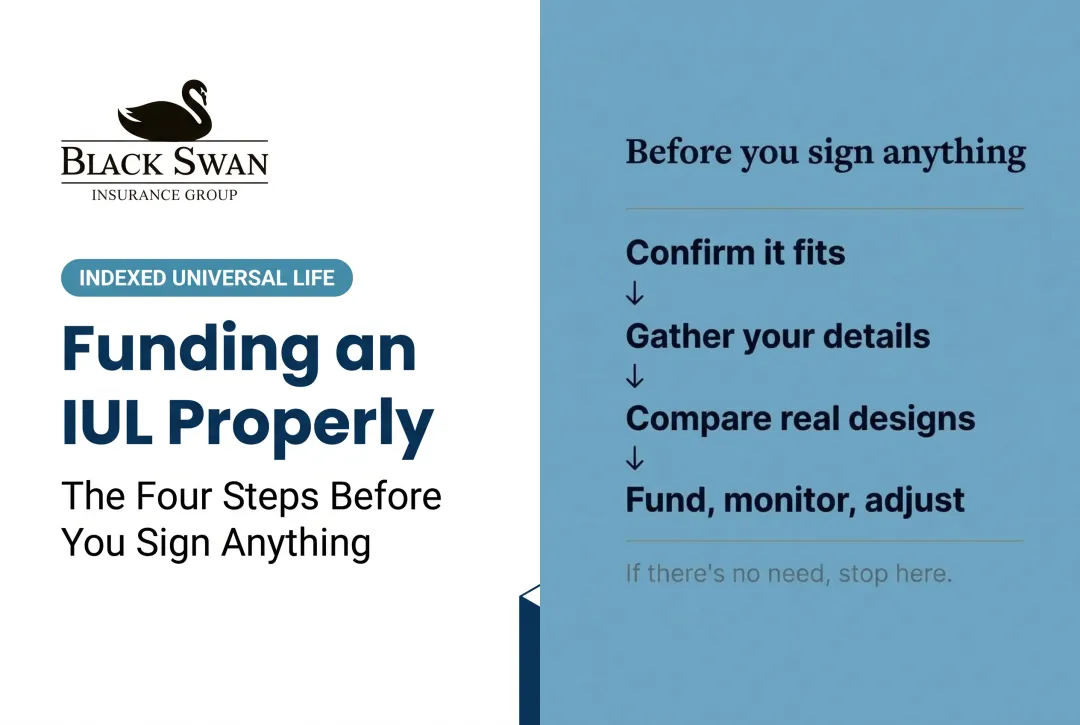
This is not set-it-and-forget-it. It is design-it, fund-it, review-it.
Missed premiums, thin trust funding, rising internal charges or weak crediting can push the policy toward lapse — and a lapsed policy inside an irrevocable trust undoes the entire estate plan it was built to protect.

Stronger Fit
Trust ownership is worth exploring if you:
- Earn $150K+ with an estate plausibly approaching the federal or your state's threshold
- Have minor, special-needs or structurally complex beneficiaries
- Need estate liquidity or a funded business buyout
- Can sustain premium funding through gifts for the life of the policy
- Have an attorney and tax professional already engaged
Weaker Fit
Hold off if you:
- Have no clear, ongoing need for permanent insurance
- Cannot support sustained premium funding
- Have high, immediate liquidity needs
- Have a modest estate and simple beneficiary arrangements
- Would strongly prefer to keep personal control — in which case trust-as-beneficiary may give you most of what you want
Risks to Understand Before You Sign
- Irrevocability is permanent. Once the ILIT is executed you generally cannot undo it, and circumstances change over thirty years.
- You lose access. No personal loans against cash value, no beneficiary changes, no surrender.
- The three-year lookback applies to transfers of existing policies.
- Gift-tax exposure attaches to premium contributions depending on structure.
- Administration never stops — trustee duties, records, notices and reviews continue for decades.
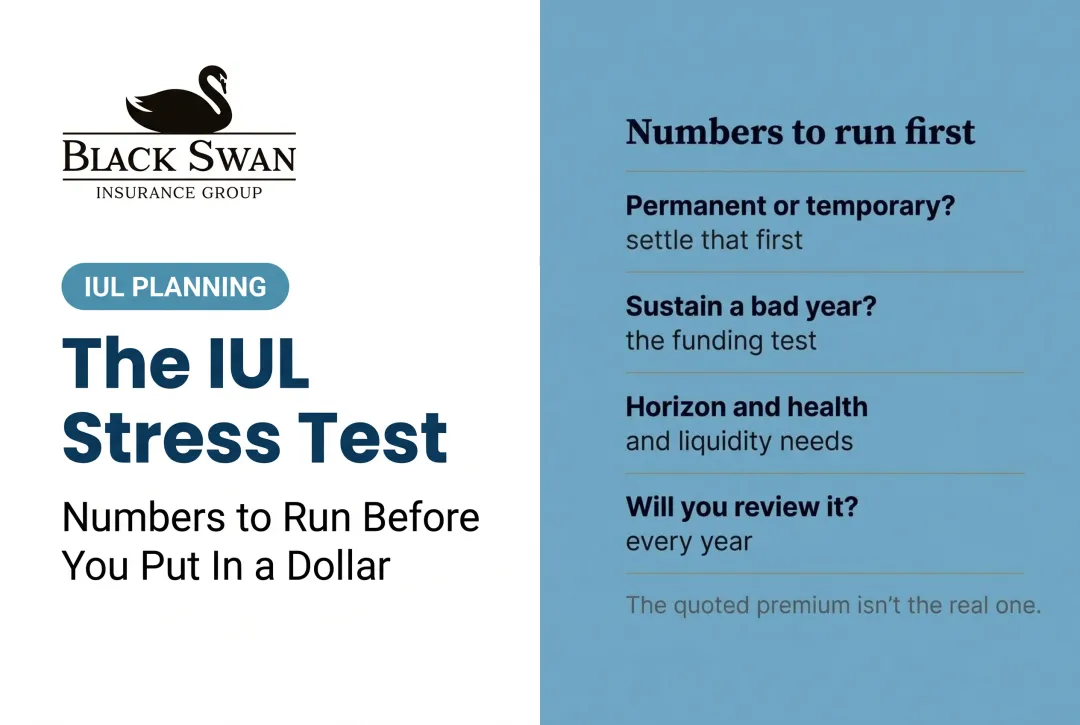
- Policy risk survives the trust. Caps and participation rates can fall, cost of insurance rises with age, and MEC status changes loan treatment. Review guaranteed against non-guaranteed values, current caps and floors, funding adequacy and any outstanding loans before an ownership change.
A trust cannot rescue an unsuitable policy or a poor funding design. A documented fit-or-no-fit review with your legal and tax advisers, completed before any ownership change, is the responsible order of operations.
Find Out Where You Actually Stand
This starts with the Tax-Free Wealth Blueprint Fit Review. If you earn $150K+ and a trust-owned policy has been proposed, we examine whether the policy itself is sound first — funding capacity, death-benefit design, charges, and how it survives lower-crediting and zero-credit years — and whether an IUL belongs in your protection and retirement strategy at all. We do not draft trusts; that is your estate attorney's work, and we will say so. If the policy does not fit, we will tell you that too, before anyone pays a drafting fee.
Frequently Asked Questions
Does naming a trust as beneficiary remove the policy from my estate?
No. If you retain ownership rights, the proceeds are generally still includable in your taxable estate. Only transferring ownership to an irrevocable trust can achieve exclusion.
Can an ILIT own an IUL?
Yes, when properly drafted and the insurer accepts the structure. You permanently lose personal control, and the trustee takes on ongoing administration.
What happens if I transfer an existing policy to an ILIT?
You complete ownership transfer paperwork with the carrier, and the transfer may carry gift-tax implications. Die within three years and proceeds can still be included in your estate. Coordinate with your attorney and tax professional first.
How much does it cost?
Legal drafting, trustee administration, policy premiums and professional review fees. Totals vary widely with trust complexity, policy size, state and the professionals involved.
Is it a good idea to name a trust as beneficiary?
It helps where you need managed distributions — minors, blended families, special circumstances. For simpler situations a direct beneficiary designation is easier and avoids unnecessary cost.
What should not go into a trust?
Assets with their own beneficiary or ownership rules — retirement accounts, existing policies, anything contractually restricted — should not be transferred automatically. Each needs professional review to avoid unintended tax consequences.
Would term insurance work inside a trust instead?
Often, yes. If the need is estate liquidity for a defined period, a term policy owned by the trust can solve it at a fraction of the premium. Permanent coverage earns its cost when the need genuinely outlives a term.
Sources
- IRS — What's new: estate and gift tax
- IRS — guidance on the three-year lookback
- Pacific Life — Indexed universal life disclosures
- NAIC — Life Insurance
- NAIC — Life Insurance Illustrations
Disclosure: This article is educational and is not personal tax, legal or investment advice. Indexed universal life is life insurance first. Trust drafting, ownership structuring and estate-tax outcomes depend on your own documents, state law and circumstances, and must be handled by a licensed attorney and tax professional. Estate and gift tax exclusion amounts change and should be confirmed with the IRS. Illustrated values are not guarantees; actual results depend on policy terms, crediting, costs and funding. Actual results depend on policy design, carrier, crediting options, caps, participation rates, expenses, funding and ongoing management. This strategy is not appropriate for everyone. Policy loans and withdrawals reduce cash value and the death benefit, and can create tax consequences if the policy lapses or becomes a modified endowment contract. Consult your own tax, legal and financial professionals for advice specific to your situation.
And remember, it's not what you earn, it's what you keep… enjoy the ride.