By Robert Balgac, Founder, Black Swan Insurance Group | October 5, 2026
Permanent life insurance is built to last as long as you do. Unlike term coverage, which expires after 10, 20 or 30 years, a permanent policy stays in force for your whole life — provided you keep paying what the contract requires.
That "provided" is doing an enormous amount of work, and it is where the disappointment in this category lives. Plenty of people sign up expecting lifelong, hands-off protection, then get caught by rising costs, funding shortfalls, or a policy lapsing at the exact moment it was supposed to matter.
The real question is not permanent versus term as a philosophy. It is whether your timeline, budget and goals genuinely call for lifelong coverage and cash value — or whether cheaper term insurance covers the need just as well.
The short answer: Permanent coverage can last a lifetime when premiums and policy conditions are met, pairing a death benefit with cash value. Whole life, universal life, variable universal life and indexed universal life trade guarantees, flexibility and market risk very differently. Cash-value access through loans, withdrawals or surrender carries trade-offs and possible tax consequences. It is not automatically better than term — fit depends on budget, timeline and goals, and "permanent" describes the design, not an outcome.
Key Takeaways
- Permanent coverage lasts a lifetime when premiums and policy conditions are met, pairing a death benefit with cash value
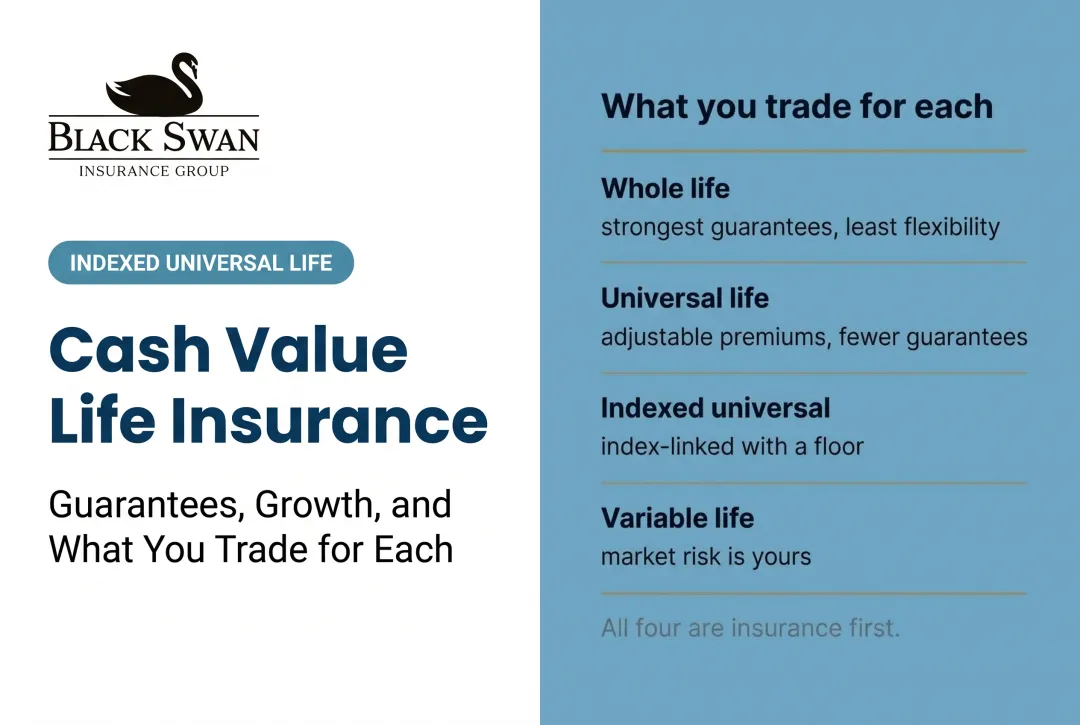
- Whole life, universal life, variable universal life and indexed universal life trade guarantees, flexibility and market risk very differently
- Cash-value access through loans, withdrawals or surrender carries trade-offs and possible tax consequences
- It is not automatically better than term — fit depends on budget, timeline and goals
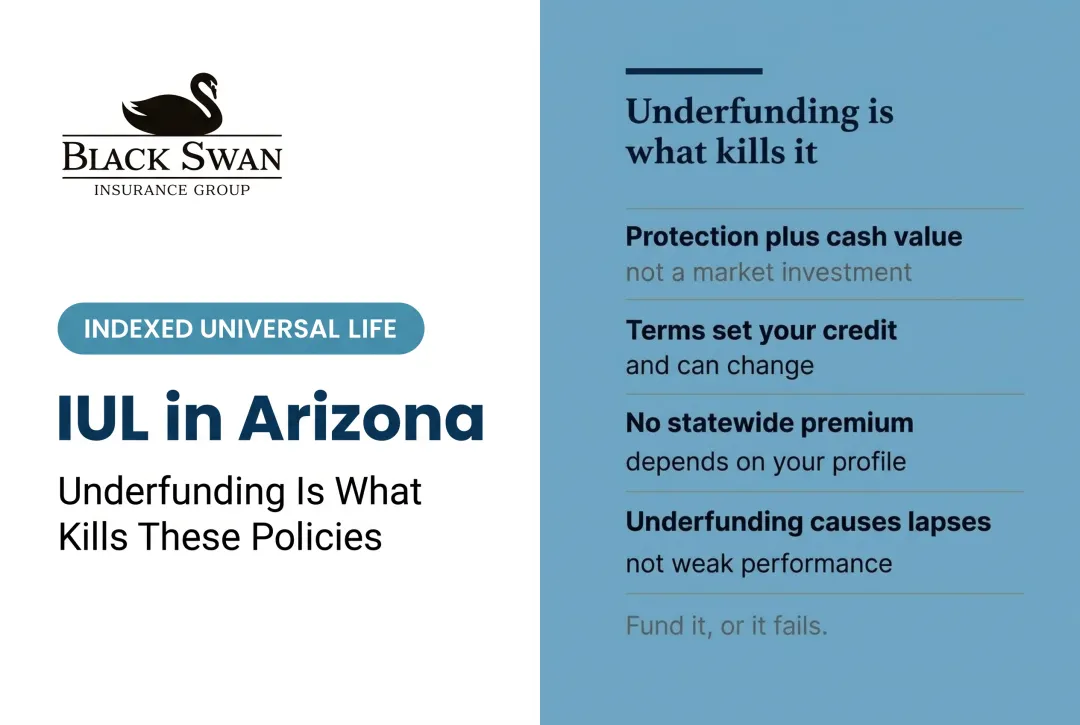
- Insufficient funding is the most common reason a "permanent" policy turns out not to be
How It Works
Coverage designed to last your entire life, as long as you meet the premium requirements and the insurer remains able to pay claims. Per the NAIC's life insurance overview, whole life provides a fixed amount of coverage lasting for the insured's entire life, while universal life pairs permanent protection with a cash account earning interest.
Two moving parts:
- Death benefit — paid to beneficiaries when you die, as long as the policy is active
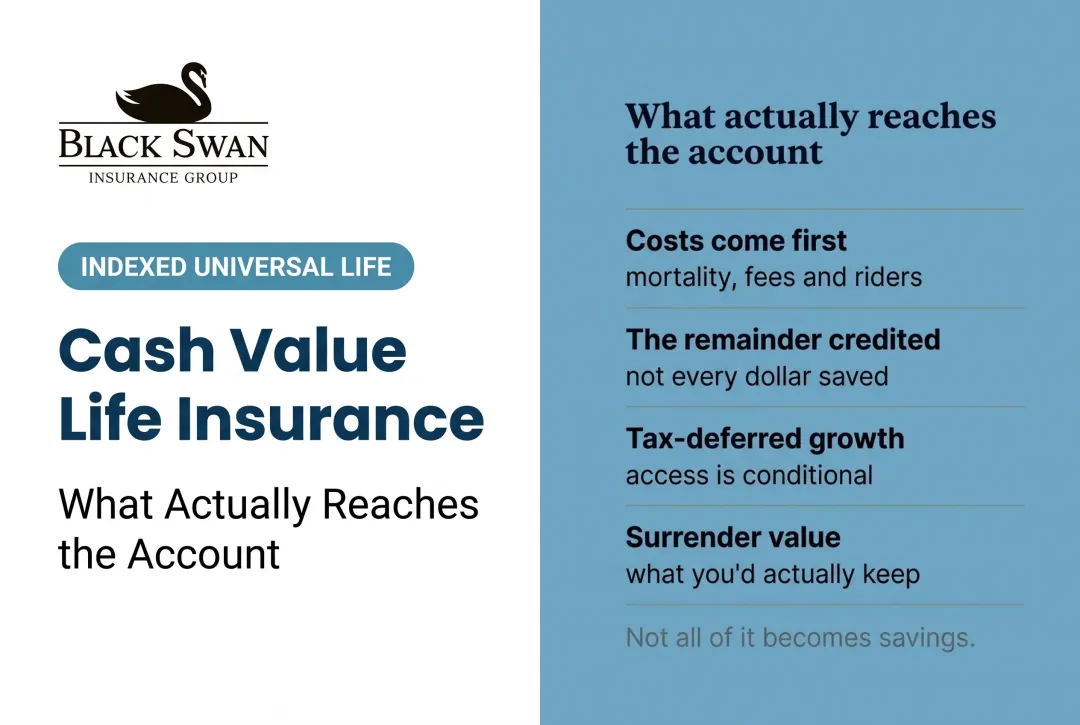
- Cash value — an account inside the policy funded by a portion of premiums after insurance costs and fees
Where the Premium Goes
- Cost of insurance — the actual price of the death benefit protection
- Administrative and policy charges — fees for maintaining the contract
- Cash-value accumulation — whatever remains
The split varies by insurer and policy type, so two policies with identical premiums can build very different cash values.
Four Terms People Confuse
- Face amount — the stated coverage amount in the contract
- Death benefit — what is actually paid, which can differ from face amount depending on design
- Cash value — the account balance built inside the policy
- Cash surrender value — cash value minus outstanding loans and surrender charges, which is what you would actually receive on cancellation
"Permanent" does not mean risk-free or self-funding. Insufficient premiums, unpaid charges, loans, withdrawals or weak performance can all erode cash value or push the policy toward lapse.

The Four Types
Whole Life
Fixed premiums and cash value growing on a guaranteed schedule while required premiums are paid. Some policies pay dividends, which are never guaranteed. This suits people wanting predictability over flexibility — the trade being less room to adjust if circumstances change.
Universal Life
Flexible premiums and adjustable death benefits. The catch is structural: the policy stays active only while cash value covers ongoing insurance charges. Skip payments, reduce funding, or face rising cost of insurance, and it can lapse faster than expected even after years of premiums.
Variable Universal Life
Cash value allocated to investment subaccounts. Higher growth potential, and real downside risk. VUL is a security sold with prospectus disclosures — review it with a licensed securities professional, per FINRA's overview of insurance products.
Indexed Universal Life
Interest credited based on an external index such as the S&P 500, without investing your money in it.
- Cap rate — the maximum credited interest in a period
- Participation rate — the percentage of index gains applied
- Floor — the minimum credited rate, often 0%, protecting against index losses
A 0% floor sounds reassuring and does not mean cash value cannot shrink. Policy charges, including cost of insurance and administrative fees, apply regardless of index performance, and illustrations showing projected growth are models rather than guarantees.
| Policy type | Premium flexibility | Cash-value growth | Investment risk |
|---|---|---|---|
| Whole life | Fixed | Guaranteed, plus possible dividends | Low |
| Universal life | Flexible | Interest-based, insurer-declared rate | Low to moderate |
| Variable universal life | Flexible | Market subaccounts | High |
| Indexed universal life | Flexible | Index-linked, capped and floored | Moderate |
Zero is your hero in a down year — but the floor applies to the credit, not to the charges.
What the Critics Get Right
The criticism of permanent insurance is the most persistent in personal finance, and most of it lands.
Critics are right that the word "permanent" describes an intention rather than a certainty, and that a flexible-premium policy is permanent only in the sense that a house is standing only while somebody maintains it. They are right that premiums are several times term for the same death benefit, and that the difference invested would outgrow the cash value in most scenarios. And they are right that a policy which lapses in year eighteen delivers the worst of every world.
Where the criticism stops is the need that does not expire. A lifelong dependent, an estate that cannot be liquidated quickly, a business obligation outlasting any term available at your age — those exist, and term insurance stops answering them at some point. For that group the question is which permanent design survives their funding, and the critics' objections become the checklist for choosing one. Not everyone should buy permanent coverage — most households should not, and saying so is the only honest way to have this conversation.
Benefits, Risks and Access
Benefits: lifelong death-benefit protection; cash-value accumulation supporting future liquidity needs; customisable death-benefit structures and riders; and estate liquidity or business-succession funding.
Risks: premiums significantly higher than term; surrender charges on early cancellation; non-guaranteed elements that can underperform illustrations; cost of insurance rising with age; and lapse risk if funding falls short.
Three Ways to Reach Cash Value
- Withdrawals lower cash value and death benefit immediately. Amounts above your basis may be taxable
- Policy loans borrow against cash value without immediate income tax while the policy is in force, though interest accrues. Unpaid loans cut the death benefit and can drive a lapse
- Surrender ends the policy. You receive cash surrender value after charges, lose coverage permanently, and may owe tax on gains
The IRS treats surrendered proceeds as taxable income to the extent they exceed what you have paid in, per IRS Publication 525.
If a policy becomes a modified endowment contract by failing the federal seven-pay test, loans and withdrawals lose the favourable treatment and are taxed income-first. Any potential tax-advantaged access is conditional on the contract being properly structured, funded and managed.
Before touching cash value, request an in-force illustration and talk to a tax professional. And do not treat cash value as an emergency fund — it takes years to build meaningful value, and early withdrawals undermine the entire point.

The Ultimate IUL Blueprint
If the indexed design is the one under consideration, the Blueprint covers what determines whether it survives: funding levels, the MEC line, loan timing and what to demand from an illustration.
Against Term Insurance
| Factor | Term insurance | Permanent insurance |
|---|---|---|
| Duration | Fixed period, 10–30 years | Lifetime, if funded |
| Initial premium | Lower | Higher |
| Cash value | None | Builds over time |
| Best for | Temporary needs | Lifelong needs |
Stronger Fit for Term
- Coverage is needed for a defined period, such as until a mortgage is paid
- Children will be financially independent within 20 years
- Budget is tight and maximum coverage matters more than lifelong guarantees
- You want simplicity and no ongoing management
Stronger Fit for Permanent Coverage
- A lifelong dependent
- Estate liquidity or business continuity planning
- Household income of $150K+ with funding sustainable through a downturn
- Final expenses or legacy goals mattering more than minimising premium cost
- Willingness to review the policy annually
Many term policies include a conversion option, allowing a switch to permanent coverage later without new medical underwriting. That bridges the gap for anyone not ready to commit today — check the conversion deadline and available policy types in your actual contract, because they vary widely.
72% of consumers overestimate the cost of basic term life insurance, per LIMRA's 2024 Insurance Barometer report. Do not assume either option is unaffordable without an actual quote.

Term is not the enemy. Cheap coverage solves a real problem. It just does not solve every problem — and permanent coverage only solves the rest if it is funded well enough to still exist.
Risks to Understand Before You Buy
- "Permanent" is conditional on premiums and policy conditions being met, and underfunding is the most common failure
- Premiums run several times term for the same death benefit
- Surrender charges apply in the early years, making an early exit expensive
- Non-guaranteed elements can underperform the illustration, including dividends and caps
- Cost of insurance rises with age and is deducted regardless of crediting or performance
- Withdrawals above basis are taxable and reduce the death benefit
- Loans accrue interest, and an unpaid balance can drive a lapse and create taxable income
- MEC status removes the favourable distribution treatment permanently
- VUL carries real market losses, and a bad sequence combined with minimum funding accelerates lapse
- Cash value is not an emergency fund, and treating it as one defeats the purpose
Find Out Where You Actually Stand
This starts with the Tax-Free Wealth Blueprint Fit Review. If you earn $150K+ and are weighing permanent against term, we separate the temporary need from the lasting one, price term for the first, test whether the second is real, and model the funding on the permanent portion through a bad decade. If it does not fit, we will tell you that too — and term-only is a frequent conclusion.
Frequently Asked Questions
Does permanent mean guaranteed?
No. It describes the design, not the outcome. The policy lasts as long as premiums and policy conditions are met, and insufficient funding is the most common reason one does not.
Why is my cash surrender value lower than my cash value?
Surrender charges and any outstanding loans are deducted. In the early to middle years that gap can be substantial.
What is the difference between the four types?
Whole life gives guarantees and fixed premiums. Universal life gives flexibility with lapse risk attached. Variable universal life adds direct market exposure. Indexed universal life credits on a capped index formula with a floor on the credit.
Can I use cash value as an emergency fund?
You should not. It takes years to build meaningful value, and early withdrawals or loans undermine the purpose and can jeopardise the policy.
What is a conversion option?
A feature on many term policies allowing conversion to permanent coverage later without new underwriting. It preserves flexibility if your health changes, and the deadline matters.
Is term insurance cheaper than people expect?
Usually far cheaper — 72% of consumers overestimate the cost. Get a quote before assuming either option is out of reach.
Sources
- NAIC — Life Insurance
- FINRA — Insurance products
- IRS Publication 525 — Taxable and Nontaxable Income
- LIMRA — 2024 Insurance Barometer fact sheet
- I.R.C. § 7702A and Rev. Proc. 2008-39 (modified endowment contracts and the seven-pay test)
Disclosure: This article is educational and is not personal tax, legal or investment advice. Indexed universal life is life insurance first. Variable universal life is a registered security sold by prospectus. Guarantees are subject to the claims-paying ability of the issuing insurer, and dividends are not guaranteed. Actual results depend on policy design, carrier, crediting options, caps, participation rates, expenses, funding and ongoing management. Policy loans and withdrawals may reduce cash value and death benefit and can create tax consequences if the policy lapses or becomes a modified endowment contract. This strategy is not appropriate for everyone. Illustrated values are not guarantees; actual results depend on policy terms, crediting, costs and funding. Consult your own tax, legal and financial professionals for advice specific to your situation.
And remember, it's not what you earn, it's what you keep… enjoy the ride.